AA Lithium-Ion Batteries
Why you need this: When disaster cuts power for days, rechargeable batteries keep essential gear running and your family safe without relying on scarce disposable batteries.Lithium-Ion AA Batteries: A Complete Guide for Reliable Everyday and Emergency Power
Lithium-ion AA batteries are modern, rechargeable power sources built into the familiar AA form factor. Unlike traditional alkaline or older rechargeable chemistries, they deliver a high-energy, consistent 1.5V output with smart protection and fast-charging features. That means brighter lights for longer, stable performance in sensors and remotes, and fewer last-minute trips to replace dead batteries. In emergencies or everyday mishaps, having dependable power on hand can be the difference between a minor inconvenience and a serious problem.
For preparedness-minded families and professionals, lithium-ion AA batteries bring essential advantages: long shelf readiness, low self-discharge, and the ability to recharge hundreds of times. Whether you are maintaining emergency kits, powering safety devices, or supporting work tools, these batteries help ensure your gear is ready when it matters most.
In day-to-day life, they reduce waste, cut costs over time, and simplify battery logistics. Many options include built-in charging ports, so you can recharge via USB power banks or solar panels, which is invaluable during power outages. In short, lithium-ion AA batteries combine convenience with resilience—an ideal match for both routine use and disaster readiness.
How It Works
At their core, lithium-ion AA batteries use a rechargeable lithium-based cell paired with circuitry that regulates voltage, protects against misuse, and enables safe charging. While they look like standard AA batteries on the outside, inside they are more advanced than typical disposables or nickel-based rechargeables.
- Internal cell and chemistry: Most use a 3.6–3.7V lithium-ion cell. Some variants use lithium iron phosphate (LiFePO4) chemistry around 3.2V. Either way, the battery includes integrated electronics to deliver a steady AA-compatible output.
- Voltage regulation to 1.5V: A step-down regulator ensures your device sees a consistent 1.5V, maintaining steady brightness or performance from full charge to near empty. This differs from alkaline batteries, which gradually lose voltage as they discharge.
- Protection and safety: A built-in battery management system (BMS) guards against over-charge, over-discharge, short-circuit, and sometimes over-temperature. These protections help extend lifespan and reduce risks.
- Charging options: Many lithium-ion AA batteries recharge via a USB port (often on each cell) or with a compatible charger. Some smart chargers detect the battery type automatically; always follow the manufacturer’s instructions.
- Capacity ratings: Because the output is regulated to 1.5V, capacity is often reported in milliwatt-hours (mWh) rather than milliamp-hours (mAh). This provides a more accurate measure of usable energy at the delivered voltage.
- Flat discharge curve: The battery maintains near-constant output until it approaches empty, then shuts off to protect the cell. This characteristic can make battery meters read differently than they would with alkaline batteries.
When The Lithium-Ion AA Batteries Helps Most
- Natural disasters: Keep flashlights, emergency radios, headlamps, and motion sensors running during hurricanes, wildfires, earthquakes, and winter storms. The ability to recharge from a power bank or solar panel is invaluable when the grid is down.
- Home accidents and outages: Power smoke alarms (where compatible), CO detectors (if specified for rechargeable use), and leak sensors. Maintain reliable operation for smart door locks, thermostats, and essential remote controls.
- Workplace readiness: Ensure test equipment, barcode scanners, wireless mice/keyboards, inspection lights, and safety beacons remain dependable throughout long shifts without frequent battery swaps.
- Vehicles and travel: Support emergency flashlights, tire pressure monitors (if AA-based), roadside beacons, and in-car entertainment accessories. Recharge from the vehicle’s USB port on the go.
- Outdoor activities: Power headlamps, GPS units (if AA-compatible), trail cameras, two-way radios, and camping lanterns. Their low self-discharge and flat output curve keep gear performing consistently.
- Family and hobby gear: Keep toys, gaming controllers, cameras, and handheld tools running longer. Rechargeability reduces cost and clutter over time.
Strengths, Suitability & Limitations
Strengths
- Consistent 1.5V output: Better device performance and brightness stability compared to the voltage drop seen in alkaline cells.
- High energy density: More usable energy in the same AA size, yielding longer run time for many devices.
- Fast, convenient charging: Recharge via USB power banks, wall adapters, or compatible chargers—ideal for preparedness kits.
- Lower long-term cost: Hundreds of recharge cycles reduce waste and recurring expenses.
- Low self-discharge: Holds charge well on the shelf, supporting “ready when needed” scenarios.
- Integrated protection: Built-in BMS safeguards against common misuse and helps preserve battery health.
- Lighter kit load: Fewer spare disposables are required; carry a charger or power bank instead.
What It’s Not For
- Devices that prohibit rechargeables: Some life-safety devices specify non-rechargeable batteries only; always follow device instructions.
- Mixing chemistries or ages: Do not combine lithium-ion AA with alkaline or NiMH in the same device, and avoid mixing new and heavily used cells.
- Extreme temperatures beyond spec: Very high heat or severe cold may impair performance; check the rated operating range.
- Legacy gear expecting alkaline discharge curves: Certain older cameras, meters, or specialty tools rely on the way alkalines sag in voltage; a regulated 1.5V may alter behavior or battery gauge readings.
- Unsupported chargers: Do not place lithium-ion AA batteries in chargers made strictly for NiMH or alkaline “recharge” gadgets.
Limitations and safety considerations
- Charging discipline: Use only the specified method (USB on-cell or a compatible charger). Incorrect charging can damage cells or create hazards.
- Thermal care: Avoid leaving batteries in hot cars, near heat sources, or in direct sun during charging or storage.
- Short-circuit protection: Keep batteries in protective cases; do not carry loose cells with keys or coins.
- Device compatibility: Confirm that the device accepts rechargeables and 1.5V regulated cells; check manuals for guidance.
- Storage state-of-charge: For long-term storage, keep at partial charge and top up every few months.
- End-of-life handling: Recycle responsibly in accordance with local regulations; never dispose in household trash.
- Travel and shipping rules: Lithium batteries are subject to transport regulations; follow airline and postal guidelines.
What to Look For When Buying a Lithium-Ion AA Battery
Not all lithium-ion AA batteries are identical. Focus on features that affect safety, performance, and total cost of ownership.
- True capacity disclosure: Look for capacity in mWh at 1.5V. Be wary of unrealistic mAh claims that ignore the regulated output voltage.
- Stable 1.5V regulation: Quality models maintain a flat output across most of the discharge. This is crucial for sensitive electronics and constant-brightness lighting.
- Battery management system (BMS): Over-charge, over-discharge, short-circuit, and temperature protections should be clearly stated.
- Charging method: Decide between on-cell USB charging (USB-C or micro-USB) for convenience or a dedicated charger for bulk charging. Confirm charge time and input requirements.
- Cycle life rating: Higher cycle ratings indicate better longevity. Typical ranges span hundreds of cycles under proper use.
- Operating temperature range: Confirm performance specs for cold-weather and hot-climate use if relevant to your environment.
- Build quality: Robust casing, secure end caps, and tight port fit (if USB-charged) help ensure durability under field conditions.
- Size and fit: AA cells should conform to standard dimensions; excessively long or short cells may fit poorly in certain devices.
- Safety and compliance markings: Look for recognized safety and transport testing marks and documentation. This indicates proper testing and quality control.
- Clear labeling: Transparent specs, recommended charging guidelines, and contact details for support are signs of a reputable manufacturer.
- Avoid low-quality imitations: Unrealistic capacity claims, vague or missing safety details, and inconsistent labeling are red flags.
Placement, Storage & Readiness
Smart placement and routine maintenance keep your lithium-ion AA batteries ready for both daily use and emergency response.
- Strategic staging: Keep charged sets near flashlights, radios, and medical or safety devices so you can deploy power quickly.
- Use protective cases: Store loose batteries in cases to prevent short circuits and physical damage.
- Cool, dry storage: Avoid heat, humidity, and direct sunlight. A climate-controlled drawer or cabinet works well.
- Partial-charge storage: For long-term storage, keep cells at roughly 40–60% charge and top up every 3–6 months.
- Device checks: Periodically test critical gear (flashlights, radios) to confirm function and battery health.
- Rotate and label: Create matched pairs or sets. Label them, rotate usage, and recharge as a group to keep cells evenly aged.
- Avoid parasitic drain: Some devices slowly draw power even when off; remove batteries during long idle periods.
- Vehicle kits: If stored in cars, use insulated cases and rotate more frequently due to temperature extremes.
How to Use It Properly
- Check compatibility: Confirm your device supports rechargeable AA batteries and does not require non-rechargeable only.
- Inspect the batteries: Look for damage, swelling, or corrosion. Do not use compromised cells.
- Charge before first use: Fully charge using the specified method (on-cell USB or compatible charger). Follow the recommended charge time.
- Insert correctly: Align positive and negative ends per device markings. Use matched cells together, especially in multi-cell devices.
- Monitor initial run: Verify stable operation and temperature. Slight warmth during use or charging can be normal; stop if the battery becomes hot.
- Recharge promptly after use: Avoid leaving lithium-ion cells fully depleted for long periods.
- Store safely: For downtime, place batteries in protective cases at a partial charge, away from heat and metal objects.
- Follow disposal rules: Recycle responsibly at end-of-life; never incinerate or throw in household trash.
Final Summary
Lithium-ion AA batteries provide reliable, rechargeable power in a familiar form, offering longer run times, stable performance, and excellent emergency readiness. They cut waste, reduce long-term costs, and pair seamlessly with portable charging sources—ideal for preparedness kits, professional gear, and everyday essentials.
Choose cells with transparent specs, built-in protections, and proven quality. Stage charged sets where you need them, store spares safely at partial charge, and maintain a simple rotation routine. With these best practices, your devices will be ready for both the everyday and the unexpected, helping you stay safe, productive, and prepared.
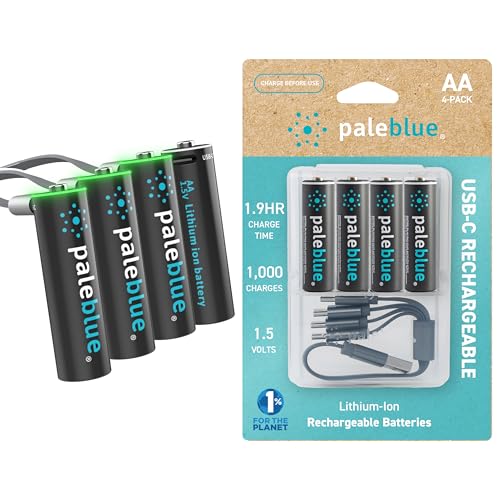
paleblue USB Rechargeable AA Batteries (4-Pack) - 2550mWh Lithium Ion, 1.5V, 1000+ Charge Cycles, Includes 4-in-1 USB-A to USB-C Charging Cable, LED Charge Indicator, Quick 1.9 Hour Charging Best for most families
- High energy density provides longer runtime per gram in radios and lights.
- Recharge from USB or solar, maintaining power during extended outages.
- Regulated 1.5‑V models hold stable voltage for AA gear; verify compatibility before use.
- Better cold-weather performance than alkaline supports operation below freezing.
 info@emerggear.com