Bleed Stop
Why you need this: This bleeding control powder stops dangerous bleeding even when help is delayed, safeguarding you and your loved ones in emergencies.bleed stop: A Complete Guide to Quick, Safe Bleeding Control
bleed stop is a practical, first-aid tool designed to control external bleeding fast. It generally refers to hemostatic dressings, gauze, pads, or powders that help your body form a stable clot more quickly than standard dressings alone. In emergencies and everyday accidents alike, minutes matter. Having bleed stop at hand can turn panic into purposeful action and buy crucial time until professional care is available.
From kitchen mishaps to workshop cuts and outdoor injuries, uncontrolled bleeding is one of the most preventable life-threatening problems. bleed stop helps you act decisively: apply it, press firmly, and keep pressure until the bleeding slows or stops. It is compact, easy to carry, and fits neatly into a home kit, workplace station, vehicle glove box, or hiking pack—making it one of the highest-impact additions to any preparedness plan.
Important: This information is educational and not a substitute for professional training or medical advice. Severe or spurting bleeding is an emergency—call local emergency services immediately, use direct pressure, and follow local guidelines.
How It Works
bleed stop products speed up your body’s natural clotting. Many use hemostatic agents—substances that encourage platelets and clotting factors to form a stable plug at the wound site—combined with materials that draw fluid away and provide a scaffold for the clot. The result is a stronger, faster clot under sustained pressure.
- Clot accelerator: Ingredients such as mineral- or biopolymer-based agents promote clot formation when they contact blood.
- Mechanical support: Gauze and pads offer a physical structure that helps the clot hold together, especially in deeper wounds that can be packed.
- Fluid control: Absorbent fibers wick blood, concentrating clotting components where they’re needed most.
- Works with pressure: Direct, firm pressure is key. bleed stop enhances the effect of pressure; it does not replace it.
- Versatile formats: Available as impregnated gauze, pads, and sometimes powders or granules—each intended for external use according to the instructions provided with the product.
When the bleed stop Helps Most
While everyday cuts are common, there are moments when being able to control bleeding quickly makes a critical difference. These realistic scenarios show where bleed stop belongs:
- Natural disasters: Earthquakes, storms, or floods can cause debris injuries and deep lacerations when emergency response may be delayed.
- Home accidents: Kitchen knife cuts, broken glass, woodworking or DIY mishaps, and yardwork injuries.
- Workplace incidents: Construction sites, warehouses, manufacturing floors, and offices where tools, machinery, or sharp edges are present.
- Vehicles: Collisions, roadside tire changes, bike or scooter crashes—keeping bleed stop in a vehicle kit can help you respond immediately.
- Outdoor activities: Camping, hiking, climbing, hunting, fishing, or trail running, where terrain, tools, and distance from help increase risk.
- Community events and sports: Youth sports, school activities, or large gatherings where minor to moderate bleeding injuries may occur.
Strengths, Suitability & Limitations
Strengths
- Fast and effective: Designed to help stop external bleeding quickly when combined with firm pressure.
- Simple to use: Clear, straightforward application; minimal steps; suitable for lay responders with basic first-aid knowledge.
- Compact and portable: Fits in small kits, pockets, and organizers; ideal for home, work, vehicle, and field kits.
- Versatile: Useful for cuts, lacerations, and many bleeding wounds that benefit from packing and pressure.
- Bridges to care: Helps stabilize bleeding while you await professional medical evaluation or transport.
What It’s Not For
- Not for internal bleeding or penetrating injuries to the chest or abdomen.
- Not a replacement for a tourniquet when life-threatening limb bleeding is not controlled with direct pressure.
- Not for eyes, mouth, or other mucous membranes unless specifically directed by qualified medical guidance.
- Not for severe burns or chemical exposures—follow burn and chemical first-aid protocols instead.
- Not for wounds with large embedded objects—do not remove the object; stabilize and seek urgent care.
Limitations and safety considerations
- Always apply firm pressure: bleed stop enhances, but does not replace, direct and continuous pressure.
- Allergy considerations: Some products use specific materials; if you have known sensitivities, select an appropriate option.
- Read and follow the instructions: Application times and techniques vary by format (gauze, pad, powder).
- Do not remove a dressing that has adhered to a controlled wound; place additional material on top if needed.
- Seek medical evaluation after use: Even when bleeding stops, professional assessment is important.
What to Look For When Buying a bleed stop
The best choice is one you can use confidently under stress. Focus on clarity, quality, and suitability for your typical environments.
- Form factor: Decide between impregnated gauze, pads, or powder. Gauze and pads are intuitive and easy to secure; powders can be helpful but may require careful handling.
- Hemostatic mechanism: Look for clearly stated active technology (for example, mineral- or biopolymer-based agents) and simple, illustrated instructions.
- Sterility and packaging: Individually sealed, sterile packaging with tear notches and clear labeling improves speed and safety.
- Size and packability: Choose sizes that fit your kit (pocket kit, vehicle kit, home station) without crowding out other essentials.
- Shelf life and lot details: Visible expiration dates, lot numbers, and manufacturing information help with rotation and accountability.
- Durability: Packaging should resist moisture, abrasion, and temperature swings common in vehicles or outdoor kits.
- User-friendly instructions: Quick-reference steps or pictograms are invaluable in stressful situations.
- Compliance and quality cues: Select products that indicate conformance with recognized medical device standards in your region.
- Avoid low-quality imitations: Be wary of vague labeling, missing instructions, unclear ingredients, or claims that sound too good to be true.
Placement, Storage & Readiness
Readiness is about access, not just ownership. Store bleed stop where you can reach it quickly and where others can find it without searching.
- Home: Kitchen, workshop, garage, bathroom, and any central first-aid station.
- Work: Near high-risk areas and in clearly marked first-aid kits accessible to trained staff.
- Vehicle: Glove box or center console for quick reach; avoid locations that overheat or crush contents.
- Outdoor and travel: Pack in the outer pocket of a backpack, range bag, or hiking kit.
- On person: If risks are higher, consider a small pouch with gloves, gauze, and bleed stop for immediate use.
Maintain your supplies the same way you would any critical tool: with routine checks and simple staging that reduces delays.
- Pair with PPE: Keep non-latex gloves and basic bandaging materials with your bleed stop for immediate use.
- Inspect regularly: Check seals, packaging integrity, and expiration dates at set intervals (for example, each season).
- Rotate stock: Replace items before they expire; move soon-to-expire items to easily accessible kits.
- Protect from extremes: Avoid prolonged heat, cold, moisture, and direct sunlight that may degrade materials.
- Label clearly: Use consistent, visible labels so anyone can identify the bleeding control supplies under stress.
How to Use It Properly
Educational guidance only: Follow the specific instructions included with your product and align with local first-aid training. Severe bleeding is an emergency—call for help immediately.
- Ensure safety and call for help: Make sure the scene is safe. Call emergency services for heavy, spurting, or uncontrolled bleeding.
- Put on gloves: Use protective gloves if available to reduce risk of contamination.
- Expose the wound: Cut or remove clothing around the injury. Quickly assess the source of bleeding.
- Apply direct pressure: If you have standard gauze, press firmly on the wound first. For moderate to severe external bleeding, proceed with bleed stop as directed on the package.
- Apply or pack the bleed stop: Place the pad or gauze directly onto the bleeding site. For deeper wounds, pack the gauze into the wound cavity gently but firmly until it is filled.
- Hold firm, continuous pressure: Maintain steady pressure for the time indicated in the product’s instructions, or until bleeding significantly slows or stops. Avoid lifting to “peek.”
- Reinforce if needed: If blood soaks through, apply additional gauze or another bleed stop dressing on top. Do not remove dressings that have adhered to the clot.
- Secure the dressing: Once bleeding is controlled, wrap with a bandage to maintain pressure and keep the dressing in place.
- Monitor and prevent shock: Keep the person warm and calm. Reassess frequently. If bleeding restarts, reapply pressure.
- Escalate when necessary: If direct pressure with bleed stop does not control life-threatening limb bleeding, a properly applied tourniquet by a trained responder may be required.
- Seek medical evaluation: After using bleed stop, ensure the person is seen by a healthcare professional. Do not attempt to remove a well-adhered hemostatic dressing yourself.
- Document details: Note the time of application and observations to share with responders.
Do not use on eyes, inside the mouth, or for internal injuries. Follow the enclosed instructions and local guidelines for safe, effective use.
Final Summary
Bleeding control is a skill—and bleed stop is a tool that makes it easier to succeed when it matters most. By accelerating clotting and reinforcing direct pressure, it helps turn chaos into calm, buying time for professional care.
Build readiness today: choose a high-quality bleed stop, store it where it’s easy to reach, review the instructions, and practice a simple response plan with your household or team. A few minutes of preparation can make the difference between a close call and a crisis.
Bottom line: keep bleed stop in your home kit, workplace station, vehicle, and outdoor pack. Know how to use it, check it regularly, and stay prepared to help—confidently and safely.
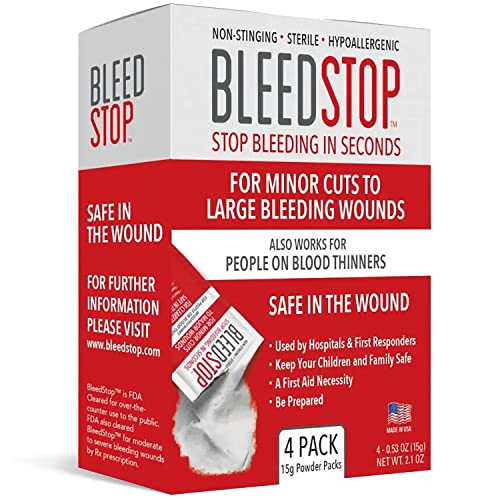
BleedStop™ First Aid Powder for Blood Clotting, Trauma Kit, Blood Thinner Patients, Camping Safety, and Survival Equipment for Moderate to Severe Bleeding Wounds or Nosebleeds - 4 (15g) Pouches Best for most families
- Hemostatic technology promotes rapid clot formation under pressure, helping control external bleeding fast.
- Compact, sterile, single-use packs fit EDC kits, go-bags, and vehicle kits.
- Effective for junctional bleeding where tourniquets are impractical.
- Compatible with standard bandages and pressure dressings for secure transport.
 info@emerggear.com