Fire Blanket
Why you need this: An emergency fire blanket lets you smother kitchen fires fast, preventing spread and protecting your family and home when seconds count.Fire Blanket: A Practical, Mess-Free Tool for Quick Fire Response
A fire blanket is a simple, reliable sheet of flame-resistant material designed to smother small fires fast. Instead of spraying chemicals, you place the blanket over flames to cut off oxygen and stop combustion. It’s a low-tech, high-impact tool that pairs perfectly with a fire extinguisher and belongs in every kitchen, workshop, vehicle, and go-bag.
Why it matters: in an emergency, speed and simplicity save lives. A fire blanket is intuitive to use, creates virtually no cleanup, and can help protect people whose clothing has ignited. Whether you’re dealing with a splattering pan, a tipped candle, or a small appliance fire, a blanket often gives you precious seconds of control before conditions worsen.
Beyond emergencies, a fire blanket also helps prevent everyday accidents from escalating. It’s useful around stoves, grills, space heaters, labs, craft areas, and garages where heat, fuel, and oxygen are close together. With proper placement and practice, a fire blanket can be the fastest safety tool you grab.
How It Works
A fire blanket stops a small fire by removing oxygen and blocking radiant heat. Most consumer blankets are made of woven fiberglass (sometimes with silicone or PTFE coatings) that can tolerate high temperatures long enough to suppress an incipient fire. When you place the blanket over the flames, it seals the fire from air and interrupts the fire triangle of heat, fuel, and oxygen.
- Starves oxygen: The blanket covers the flame and perimeter, preventing air from feeding combustion.
- Insulates heat: The fabric creates a barrier that helps cool the area and slows re-ignition.
- Controls splatter: Especially helpful for small cooking oil incidents where sprays can spread fire.
- Shields the user: When held correctly, it can act as a brief thermal shield while you get close enough to smother flames.
- Simple deployment: Quick-release tabs let you pull the blanket from its pouch in one motion.
When the Fire Blanket Helps Most
- Home accidents
- Small pan fires on the stove (never move the pan; turn off heat first if it’s safe).
- Candle flare-ups or decorations igniting nearby items.
- Space heater mishaps that singe fabrics or rugs.
- Clothing fires—use the blanket to wrap the person and smother flames.
- Small appliance or wiring smolders (after disconnecting power if safe).
- Workplace situations
- Commercial kitchens handling hot oil and open flames.
- Workshops with solvents, sawdust, or welding sparks.
- Laboratories where Bunsen burners or alcohol flames are used.
- Manufacturing or maintenance areas with heat-producing tools.
- Vehicles and transit
- Small engine bay or electrical smolders (only if safe and accessible).
- RVs, boats, and camper vans where cooking and batteries are close.
- Portable power stations and charging areas showing minor flare-ups.
- Outdoor activities
- Campfire or grill flare-ups that need fast smothering.
- Portable stoves for hiking and overlanding.
- Fire pits when embers pop into nearby materials.
- Natural disasters
- Ember attacks from wildfires causing spot ignitions on patios or in yards.
- After earthquakes, for small flare-ups from displaced cooking areas (turn off utilities if advised).
- During storms when power surges cause minor electrical smolders.
Strengths, Suitability & Limitations
Strengths
- Instant, mess-free response with no residue and minimal property damage.
- Great for kitchens and small liquid fires where extinguishers may spread splatter.
- Helps with clothing fires by wrapping and smothering flames.
- Simple training—most people can learn the basics in minutes.
- Budget-friendly addition that complements—never replaces—extinguishers and alarms.
What It’s Not For
- Large or fast-growing fires—evacuate and call emergency services immediately.
- Pressurized gas or oxidizer-fed fires that can’t be smothered.
- Deep fryer or large-volume oil fires that exceed the blanket’s coverage area.
- Metal (Class D) fires such as magnesium or sodium—specialized agents are required.
- Advanced lithium-ion battery thermal runaway—a blanket may help contain flames but may not stop the reaction.
Limitations and safety considerations
- Effectiveness depends on full coverage; gaps can allow oxygen to re-feed the fire.
- Heat can transfer through; keep hands protected behind the blanket’s top edge.
- Re-ignition is possible—leave the blanket in place until completely cool and monitor closely.
- Electrical hazards: disconnect power if it’s safe to do so; assume energized equipment is dangerous.
- Most household blankets are single-use—replace after exposure to flame or contamination.
What to Look For When Buying a fire blanket
Selecting the right fire blanket is all about quality materials, certification, and practical sizing. Avoid flimsy, uncertified products that look similar but perform poorly when heat spikes.
- Recognized safety standards: Look for compliance with established benchmarks (for example, EN 1869 or an equivalent local certification). Clear labeling, usage instructions, and manufacturer contact details are positive signs.
- Material and weave: Woven fiberglass is common for household use. Heavier weaves generally provide better thermal resistance and durability. Silicone or PTFE coatings can add splash and oil resistance.
- Edges and stitching: Well-bound edges and strong stitching reduce fraying and help the blanket keep its shape under stress.
- Size matters:
- Small (around 1 m × 1 m) for compact kitchens or RVs.
- Medium (about 1.2 m × 1.2 m) for most homes.
- Large (up to 1.8 m × 1.8 m) for wrapping a person or covering larger surfaces.
- Heat tolerance: Check the stated operating range; higher-rated fabrics handle heat longer without degrading.
- Deployment pouch and pull tabs: A rigid, wall-mountable case with long pull tabs speeds access during panic.
- Clear instructions: Labels should illustrate how to deploy and where to place the blanket.
- Quality control and authenticity: Beware of too-cheap options, vague certifications, misspelled labels, or very thin fabric. Counterfeit or substandard blankets can fail when you need them most.
- Service life and replacement: Favor products with a recommended inspection and replacement interval. Replace immediately after use or damage.
Placement, Storage & Readiness
Strategic placement and quick access are essential. A fire blanket should be visible, reachable, and near likely hazards, but not so close that you must reach through flames to grab it.
- Kitchen: Mount on a wall away from the stove but within arm’s reach—ideally near an exit path.
- Garage and workshop: Place near benches, charging stations, and welding or grinding areas.
- Living spaces: Keep near fireplaces, space heaters, and candle zones.
- Vehicles and travel: Store in the glove box, under a seat, or a quick-access compartment in RVs and boats.
- Outdoors: Keep with grill tools or in a camp kitchen tote.
Maintenance tips:
- Inspect quarterly: Ensure the case is intact, pull tabs are accessible, and labels are legible.
- Keep it dry and clean: Moisture, oils, and heavy dust can impair performance.
- Practice the pull: Walk household members or coworkers through the steps so no one hesitates during an emergency.
- Do not obstruct: Avoid burying the blanket behind clutter or in a hard-to-open cabinet.
- Replace after use or damage: Treat household blankets as single-use or follow the maker’s guidance.
How to Use It Properly
These steps are educational and general. Always prioritize personal safety, keep an exit at your back, and call emergency services for anything more than a small, contained fire.
- Assess quickly: If the fire is larger than a small bin or spreading rapidly, evacuate and call for help.
- Kill the fuel if safe: Turn off the stove, appliance, or power source—only if you can do so without risk.
- Open the case: Pull down on the release tabs to remove the blanket from its pouch.
- Protect your hands: Grasp the top edges and fold the blanket’s upper portion over your hands to shield them.
- Approach low and shielded: Keep the blanket between you and the fire as you move in.
- Place, don’t throw: Gently lay the blanket over the fire, covering the base and edges to seal out air. Do not move a burning pan.
- Leave it in place: Keep the blanket on until the area is fully cool to the touch. Do not peek—oxygen can reignite flames.
- Monitor and ventilate: Once cool, remove the blanket carefully, ventilate smoke, and watch for re-ignition.
- Dispose and replace: If the blanket was exposed to flame or contamination, treat it as single-use and replace it.
- Seek medical help if needed: For any burns or smoke exposure, get professional medical attention.
For clothing fires: Instruct the person to stop, drop, and roll. Wrap them with the fire blanket from the shoulders down, pat to smother flames, call emergency services, and cool burns with clean, cool (not cold) water.
Important: If you smell gas, suspect energized equipment, or the fire is not immediately controllable, evacuate and call emergency services.
Final Summary
A fire blanket is a compact, affordable tool that offers immediate control over small, early-stage fires without the mess of traditional agents. It’s easy to deploy, intuitive to learn, and invaluable for kitchens, workshops, travel, and outdoor living. When paired with smoke alarms, safe cooking habits, and a suitable extinguisher, it significantly improves your preparedness.
Be ready before you need it: choose a certified, well-built blanket in the right size, mount it where you can reach it fast, and practice the steps with your household or team. Preparedness turns panic into action—and action saves lives.
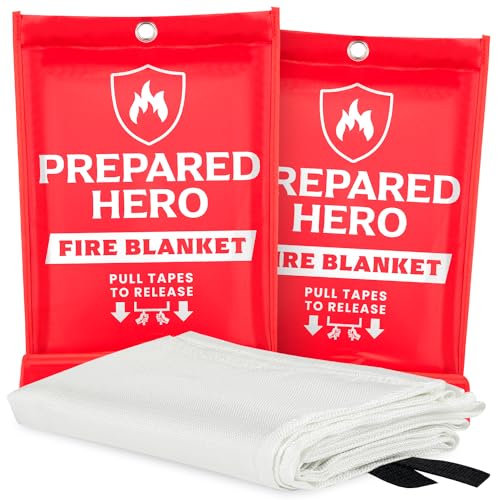
Prepared Hero Emergency Fire Blanket - 2 Pack - Fire Suppression for Kitchen, 40” x 40” Fiberglass Fire Blanket for Home Best for most families
- Smothers flames by oxygen deprivation; effective on small pan, clothing, and wastebasket fires.
- Deployed in seconds; no pin, pressure gauge, or recharge schedule.
- Residue-free with no discharge cloud; preserves visibility and reduces contamination.
- Electrically nonconductive and compact; stores flat in homes, vehicles, and go-bags.
 info@emerggear.com