Ham Radio
Why you need this: When cell networks go down in a disaster, a two-way radio lets your family stay coordinated over miles and reach help.Ham Radio: Reliable Off-Grid Communication for Emergencies and Everyday Preparedness
Ham radio—also known as amateur radio—is a personal, non-commercial communication service that lets licensed operators talk across town or around the world using radios, antennas, and the airwaves. It matters because it works without phone networks, internet, or crowded consumer services, giving you a dependable way to reach people when it counts.
During storms, power outages, and infrastructure failures, ham radio can be the resilient communication backbone that keeps families, neighbors, and volunteer responders in touch. It also helps with everyday accidents—from a car battery dying on a backroad to a hiking mishap—where a quick call on a local repeater or a nearby operator’s radio net can speed up assistance.
Beyond emergencies, ham radio builds useful skills: clear communication under stress, basic electronics, antenna know-how, and community coordination. It’s a hobby that doubles as a preparedness tool, giving you a trusted, off-grid option that fills gaps left by phones and the internet.
How It Works
A ham radio is a transceiver: it both transmits and receives. Your voice (or data) is converted into radio frequency (RF) energy and radiated by an antenna. Others tune to the same frequency to hear you. Press the push-to-talk button to speak; release it to listen. Communication can be direct (simplex) or via a repeater—a station on a tower or high spot that listens on one frequency and re-transmits on another to extend your range.
Ham operators use different frequency bands for different jobs. VHF and UHF bands excel at local, line-of-sight communication around towns and cities. HF bands can reach hundreds or thousands of miles by bouncing signals off the ionosphere. There are also digital voice and data modes for text, location sharing, and messaging. Some systems link radios through networks, but your local RF-to-RF capability remains independent when the internet is down.
- Core parts: a transceiver, an appropriate antenna, a power source (battery or 12V supply), and a microphone or headset.
- Simplex vs. repeater: simplex is radio-to-radio; repeaters relay your signal from high elevation to cover much larger areas.
- Range: handheld radios typically cover a neighborhood to a few miles; with a good repeater, dozens of miles; HF can reach far beyond your region.
- Modes: analog voice (common and simple), digital voice and data (for clarity and features), and specialized modes for long-distance or low-power operation.
- Identification and licensing: operators identify with a call sign and follow local regulations. Rules and band allocations vary by country.
- Nets and procedures: local “nets” are scheduled gatherings that practice organized communication and take check-ins—excellent for newcomers.
In short, ham radio works because it creates its own infrastructure—people, radios, antennas, and shared procedures—so you are not dependent on fragile systems during crises.
When Ham Radio Helps Most
- Natural disasters: hurricanes, earthquakes, wildfires, floods, ice storms, and tornadoes can knock out power and cell towers. Operators can relay situational awareness, welfare check-ins, shelter information, and resource requests.
- Home accidents: power outages, medical concerns, or downed lines can render phones unreliable. A quick call on a local repeater or neighborhood net can summon assistance or answers.
- Workplace disruptions: while amateur bands are not for business operations, licensed staff can personally coordinate safety check-ins during regional outages, share local hazard updates, and stay informed until normal services return.
- Vehicles: a breakdown in a coverage dead zone, winter road closures, or remote travel can leave you without a phone signal. A mobile ham radio can reach a distant repeater or passing operators for help.
- Outdoor activities: hiking, camping, overlanding, paddling, hunting, or mountaineering in remote areas benefit from ham radio’s range and reliability. Local repeaters, simplex calling, and portable antennas can bridge long distances.
- Community events and volunteer efforts: parades, searches, charity runs, or neighborhood preparedness drills often rely on ham radio for organized, low-latency communication.
- Travel and off-grid living: in sparsely populated regions—or anywhere with marginal service—ham radio provides dependable contact and weather or hazard updates.
Strengths, Suitability & Limitations
Strengths
- Works when other systems fail: independent of cell towers and internet.
- Flexible range: local coverage on VHF/UHF, regional and worldwide potential on HF.
- Community network: local operators, repeaters, and nets that can coordinate quickly in emergencies.
- Clear, low-latency voice: immediate two-way communication without logins or infrastructure.
- Scalable capability: add better antennas, mobile setups, or base stations over time.
- Skill-building: regular practice creates calm, concise communicators and effective volunteers.
What It’s Not For
- Not a replacement for emergency services: use local emergency numbers first when available.
- Not for business use: amateur radio is generally prohibited for commercial communications.
- Not private or encrypted: conversations are public; assume anyone can listen.
- Not cross-service gear: do not transmit on non-amateur services (like public safety or other personal radio services) with a ham radio.
- Not license-free: most countries require a license to transmit on amateur bands.
Limitations and safety considerations
- Licensing and law: learn and follow your region’s rules; emergency exceptions vary and are not universal.
- Terrain and propagation: hills, buildings, and atmosphere affect range; antennas matter as much as power.
- Power dependency: batteries and power supplies need charging; plan for backup energy.
- RF exposure and installation safety: use proper antenna placement, grounding, and lightning protection; respect exposure limits and avoid unsafe climbs.
- Operating distractions: don’t operate while driving unless you can do so safely and legally.
- Equipment quality: poorly designed radios can cause interference; ensure your gear meets regional standards.
What to Look For When Buying a Ham Radio
Choose a ham radio based on how you plan to use it. Think about range needs, durability, and power options. Handhelds are portable and great for local repeaters. Mobile units mount in vehicles for higher power and better antennas. Base stations offer maximum performance at home, especially for HF.
- Form factor: handheld (most portable), mobile (vehicle or home with 12V), or base (highest performance and comfort).
- Frequency coverage: VHF/UHF for local communication; HF for regional to global reach. Some radios cover multiple bands.
- Receiver performance: good sensitivity and selectivity to handle crowded signals without overload or intermodulation.
- Power output: handhelds are typically low power for portability; mobiles and bases provide higher power for tougher conditions.
- Battery and charging: look for safe, reliable battery chemistry, realistic capacity, and convenient charging options (vehicle, wall, portable power). Spare batteries are valuable.
- Audio quality and ergonomics: clear speaker audio, an easy-to-read display, and controls that you can use with gloves or in low light.
- Repeater features: support for standard offsets, tone encode/decode (CTCSS/DCS), split frequencies, and memory channels.
- Digital modes and data: consider whether you want digital voice, text/messaging features, or location beacons for tracking during outings.
- Antenna options: removable antennas expand capability; ensure common connectors and compatibility with mobile or base antennas.
- Weather and hazard monitoring: access to local broadcast hazard information and alerts can be helpful for preparedness.
- Build quality and environmental resistance: robust cases, secure battery latches, sealed ports, and rated resistance to dust or light rain can extend gear life.
- Programming and memories: ample memory channels, simple programming on the device, and optional computer or app programming support.
- Safety and compliance: ensure the radio meets your region’s requirements for spectral purity and RF exposure guidelines.
- Documentation and support: clear manuals, active user communities, and available accessories make ownership easier and safer.
Beware low-quality imitations: unrealistic power claims, vague specifications, poor audio, unstable frequency accuracy, or excessive spurious emissions can create interference and disappoint when you need reliability most. If a deal looks too good to be true, evaluate carefully and prioritize proven build quality and clear documentation.
Placement, Storage & Readiness
Strategic placement and maintenance ensure your ham radio is ready when needed. Think in layers: home base, vehicle, and go-bag. Pre-program key channels and keep simple instructions with each radio.
- At home: keep a radio near your emergency kit. For base setups, route coax safely, use proper grounding, and consider backup power. Store a printed list of local repeaters and calling frequencies.
- In vehicles: mount radios and antennas securely. Keep a spare handheld, charging cable, and a small external antenna for improved range.
- Go-bag essentials: radio, spare battery, charger, compact antenna, frequency list, laminated quick-reference card, small notepad, and pencil.
- Battery care: avoid extreme heat and cold. If storing, keep lithium-ion batteries partially charged and cycle them periodically.
- Inspection cadence: test the radio monthly, charge batteries, and check the antenna connector, microphone, and cables.
- Programming readiness: update memory channels with local repeaters, simplex calling frequencies, and nearby emergency nets. Label memory channels clearly.
- Common mistakes to avoid: waiting until a crisis to learn your radio, letting batteries sit discharged, neglecting a backup antenna or power source, and forgetting to identify properly on the air.
How to Use It Properly
- Know the rules: obtain the appropriate license for your country and learn local band plans and identification requirements. In a life-threatening emergency, follow your region’s laws and procedures for seeking help.
- Power up: charge the battery or connect a stable 12V supply. Verify the radio turns on and audio is clear.
- Attach the correct antenna: match the antenna to the band you plan to use. Do not transmit without an appropriate, connected antenna.
- Program key channels: set local repeaters (with offsets and tones), regional calling frequencies, and nearby simplex options. Save them to memory for quick access.
- Listen first: monitor the channel for at least 10 seconds to avoid interrupting ongoing traffic and to confirm the frequency is in use.
- Make a call: press PTT and speak clearly: “This is [your call sign], monitoring.” Release PTT and listen. If using a repeater, leave short pauses so others can break in and so the repeater does not time out.
- Use good mic technique: hold the mic a few centimeters from your mouth, speak across the mic (not directly into it), and keep messages brief and purposeful.
- Emergency traffic: if you have urgent, life-safety information, announce “Emergency traffic,” give your call sign, location, and the nature of the emergency. Follow the net control operator’s instructions if a net is active.
- Adjust for conditions: increase power only as needed, try a higher elevation, switch antennas, or move to a clearer channel if signals are weak.
- Wrap up and log: when done, identify with your call sign, power off or recharge, and note any issues to fix before your next session.
Safety reminders: prioritize calling local emergency numbers when available, operate within your license privileges, avoid distractions while driving, and respect RF exposure and electrical safety guidelines.
Final Summary
A ham radio gives you reliable, off-grid communication when phones fail and a practical way to coordinate help during accidents, outages, and disasters. With a small investment in training, a sensible purchase, and regular practice, you gain a resilient lifeline that serves both your household and your community.
Prepare now: choose a quality radio that fits your goals, program local channels, store it where you can reach it fast, and practice on community nets. The time you spend today turns into calm, confident communication when it matters most.
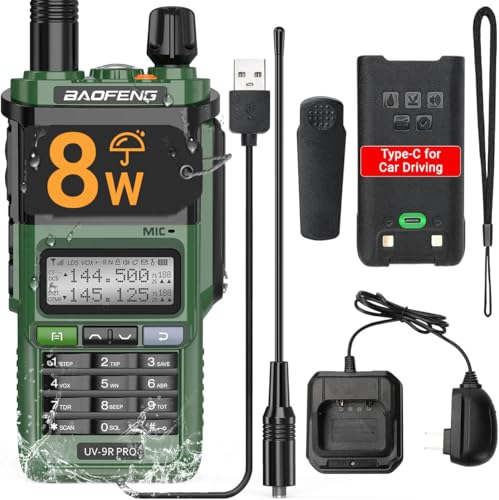
Ham Radio Baofeng UV-9R Pro 8W Long Range VHF UHF Dual Band Tri- Power Rechargeable Handheld Two-Way Radio Walkie Talkies With Type-C Charging Cable For Camping Hunting Survival Gear Best for most families
- Operates without towers, fiber, or internet; uses simplex links or local repeaters.
- VHF/UHF cover neighborhoods; HF reaches outside the disaster zone for coordination.
- Runs from AA or 18650 packs, 12-volt vehicles, solar, or generators.
- Community emergency nets and standard practices reduce confusion and deliver verifiable message traffic.
 info@emerggear.com