Instant Glue
Why you need this: In emergencies, super glue keeps critical gear working with quick, reliable repairs, protecting shelter and loved ones when replacements aren't available.Instant Glue: Fast Repairs for Emergencies and Everyday Fixes
Instant glue is a fast-curing adhesive based on cyanoacrylate chemistry, designed to create strong bonds in seconds on a wide range of materials. When an item chips, cracks, or separates, this compact adhesive can turn a potential headache into a quick, controlled repair. It matters because it saves time, prevents further damage, and restores function—all without special tools or lengthy setup.
Whether you’re dealing with a surprise break during a busy morning or managing a minor failure in the middle of a trip, instant glue can provide a reliable stopgap or permanent fix for many everyday accidents. It belongs in household drawers, toolboxes, desk kits, vehicle glove compartments, and go-bags because the right drop, applied correctly, can keep your day moving.
In emergency preparedness, small tools with big impact are invaluable. Instant glue helps stabilize small cracks, reattach loose components, and keep gear operational until a full repair or replacement is possible. Its speed and versatility make it a smart, lightweight addition to any readiness plan.
How It Works
Instant glue is a cyanoacrylate adhesive. It cures when exposed to trace moisture on surfaces and in the air, triggering rapid polymerization. The result is a rigid, thermoplastic bond that grabs fast and reaches high handling strength within seconds.
- Moisture-activated cure: Even tiny amounts of humidity start the reaction. Warmer, more humid environments generally speed up set time.
- Thin layer, stronger bond: A very small amount is best. Thin films allow the adhesive to polymerize quickly and evenly, improving strength.
- Surface fit matters: Tight, well-mated surfaces bond best. Large gaps reduce performance unless a thicker gel formulation is used.
- Exothermic reaction: The cure releases heat, especially with porous or natural fibers. Avoid cotton and wool—heat and fumes may result.
- Set vs. full cure: Parts may hold in seconds, but full strength often takes hours. Allow proper cure time before stressing the joint.
- Best on many common materials: Metals, ceramics, many plastics, rubber, leather, and wood—though some low-energy plastics and silicone are difficult to bond without special primers.
When Instant Glue Helps Most
- Natural disasters and severe weather: Temporarily secure cracked housings on flashlights or radios, reattach small knobs or latches, stabilize chipped plastic parts on emergency gear, and reinforce minor breaks on storage containers.
- Home accidents: Fix detached trim, broken plastic clips, cracked ceramic decor (non-food-contact), loose rubber feet on appliances, or delaminating edges on small household items.
- Workplace situations: Reattach labels or small fixtures, secure prototype pieces, fix broken clips and office accessories, or make quick jigs for light-duty tasks to keep work flowing.
- Vehicles: Re-secure loose interior panels, minor trim pieces, emblems, or plastic clips while on the road. Use only for non-structural, non-safety-critical items and avoid high-heat zones.
- Outdoor activities: Patch delaminating gear, reattach zipper pulls, fix cracked plastic buckles, reinforce fly-rod accessories, or mend minor damage to camping equipment between proper repairs.
Strengths, Suitability & Limitations
Strengths
- Speed: Achieves handling strength in seconds for quick turnarounds.
- Precision: Small, controlled drops bond tiny parts with minimal mess.
- Versatility: Bonds many common materials without mixing.
- Portability: Compact tubes stash easily in kits, tool rolls, and drawers.
- Cost-effective: A little goes a long way, reducing repair costs.
What It’s Not For
- Structural or safety-critical components: Not suitable for load-bearing or life-safety applications.
- High-flex joints: Bonds are rigid and can crack under repeated bending or peel forces.
- High-temperature exposure: Prolonged heat weakens the bond.
- Continuous water immersion: Not ideal for underwater or long-term wet environments.
- Difficult substrates: Silicone, some fluoropolymers, and low-surface-energy plastics (like certain polyethylene and polypropylene) resist bonding without primers.
- Food-contact or medical use: Do not use on items that contact food or for wound closure unless a product is specifically designed and labeled for that purpose.
Limitations and safety considerations
- Skin bonding risk: Bonds skin instantly. Wear nitrile gloves, work carefully, and keep acetone-based remover accessible.
- Fumes and blooming: Vapors can irritate eyes and may leave a white residue (bloom) near the joint; ensure ventilation.
- Heat with natural fibers: Contact with cotton or wool can cause rapid heat and smoke; avoid using such applicators.
- Brittleness: Strong in shear but less resistant to impact or peel loads; design joints accordingly.
- Not gap-filling by default: Thin formulations require close-fitting surfaces; use gel variations for small gaps.
What to Look For When Buying an Instant Glue
Selecting the right instant glue improves results, reduces waste, and enhances safety. Consider the following features and quality indicators:
- Viscosity: Thin formulas wick into hairline cracks; medium balance control and penetration; gels stay put and can bridge small gaps.
- Set and cure time: Check both the initial grab time and full-cure timeline to match your workflow and patience.
- Applicator design: Precision tips, brush caps, micro-nozzles, and single-use ampoules reduce mess and improve accuracy.
- Anti-clog cap and seal: Quality closures help prevent premature curing in the nozzle and extend usability after opening.
- Packaging size: Smaller tubes reduce waste if you use adhesive infrequently; larger bottles suit frequent users who manage storage well.
- Material compatibility: Look for clear guidance on plastics, rubber, wood, metal, and ceramics. Some formulas are tuned for specific substrates.
- Strength and toughness: Data such as shear strength and temperature range help you gauge performance for your tasks.
- Low-odor/low-bloom options: Useful for visible repairs where residue or strong odor would be a problem.
- Shelf life and freshness: Check manufacture or expiration information; fresher adhesive performs better.
- Safety labeling: Ensure clear hazard statements, first-aid guidance, and child-resistant packaging where applicable.
Beware of low-quality imitations. Signs include overly watery consistency, inconsistent curing, poorly sealed caps, or missing safety information. Prioritize products with clear specifications and reputable manufacturing quality to avoid frustration and failed bonds.
Placement, Storage & Readiness
To keep instant glue ready when you need it most, store it properly and plan its placement across your spaces.
- Where to keep it: Stock a tube in your home tool drawer, workshop kit, office desk kit, emergency go-bag, and—with caution—your vehicle. Avoid spots exposed to prolonged high heat.
- Temperature and humidity: Store in a cool, dry place, tightly sealed, and upright. If you refrigerate unopened tubes to extend shelf life, seal them in an airtight bag and let them warm to room temperature before opening to avoid condensation.
- Nozzle care: Wipe tips clean, cap immediately, and keep threads free of residue to reduce clogging.
- Rotation and dating: Mark open dates and rotate stock. Most tubes perform best within months of opening.
- Transport: Keep tubes in a small, rigid container or zip bag to prevent accidental squeezing inside packs.
- Keep away from children and pets: Store out of reach and follow all safety warnings.
- Inspection cadence: Quarterly checks for clogs, thickening, or crystallization help you replace aging adhesive before you need it.
Common mistakes to avoid: Leaving caps off, using cotton swabs as applicators, over-applying adhesive, and storing near active heat sources. Small corrections—like using a toothpick or plastic applicator and applying just a drop—go a long way.
How to Use It Properly
- Work safely: Wear eye protection and nitrile gloves. Ensure ventilation. Keep away from children, pets, and open flames.
- Test fit the parts: Align pieces without adhesive to confirm the joint is tight and properly oriented.
- Prep the surfaces: Clean oils and dust with isopropyl alcohol and let dry. Lightly roughen glossy surfaces with fine sandpaper if appropriate.
- Plan the application: For hairline cracks, choose a thinner formula; for small gaps, a gel may work better.
- Apply a tiny amount: Less is more. Use a drop or thin film, spreading with a plastic applicator or toothpick. Avoid cotton or wool.
- Join and hold: Press parts together with steady pressure for the recommended set time. Use light clamping for precise alignment if needed.
- Manage squeeze-out: If excess appears, wait until it becomes tacky and carefully remove with a plastic scraper. Avoid smearing.
- Allow full cure: Even if the part holds in seconds, wait the stated cure time before applying stress, heat, or moisture.
- Clean the nozzle and store: Wipe, cap tightly, and store upright in a cool, dry place.
- If skin bonds occur: Soak in warm, soapy water and gently roll skin apart; acetone-based remover can help. Do not pull forcefully. For eye exposure or significant incidents, seek professional medical help.
Final Summary
Instant glue delivers big utility in a tiny package—from everyday household fixes to quick emergency stabilizations. Its rapid bonding, precision application, and wide material compatibility make it a smart addition to home, work, vehicle, and outdoor kits.
Choose thoughtfully by comparing viscosity, set time, packaging, and safety features, and store it correctly to maximize shelf life and reliability. Used with care and good technique, instant glue helps you repair more and replace less, keeping your life—and your gear—moving forward.
Be prepared, stay safe, and keep a fresh tube on hand so that the next time something small breaks at the worst possible time, you have a fast, dependable fix within reach.
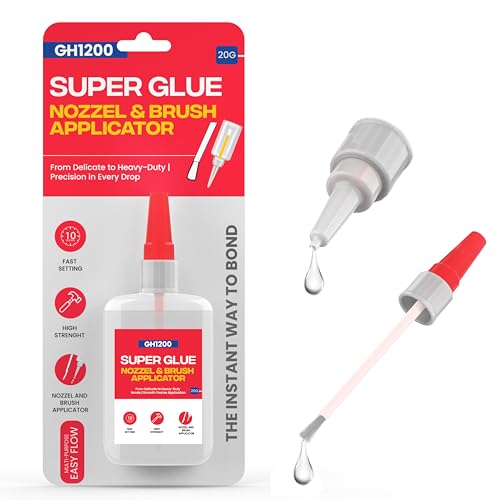
GH1200 (2-in-1) Super Glue with Brush Applicator & Nozzle, Mess Free Superglue Brush, Instant Never Dries, 3000 CPS Ca Glue, No Stain Clear Glue, Super Glue for Plastic, Rubber & More Best for most families
- Bonds in seconds for time-critical fixes; stabilizes gear and seals small, non-pressurized leaks.
- Adheres to most metals, plastics, rubber, and wood; no mixing or heat required.
- Forms a waterproof, rigid seal; resists water and many common oils once cured.
- Can approximate minor, clean skin edges when help is delayed; avoid deep or contaminated wounds.
 info@emerggear.com