Tarp
Why you need this: In emergencies, a survival tarp keeps you and your family dry, shaded, and safe when storms hit or shelter is scarce.Tarp: A Complete Guide to Everyday Protection and Emergency Readiness
A tarp, short for tarpaulin, is a flexible sheet designed to shield people, places, and gear from the elements. It is most commonly used as a fast, waterproof barrier that can be deployed in seconds, whether you’re dealing with a leaky roof after a storm, covering a broken window, keeping camping gear dry, or protecting tools at a worksite. Because a tarp is lightweight, packable, and versatile, it serves as a reliable first line of defense in both everyday mishaps and large-scale emergencies. The right tarp helps you control water, wind, dust, UV exposure, and debris, turning a minor crisis into a manageable task.
In emergencies, a tarp provides temporary coverage that can prevent small issues from escalating. Think of it as a multifunctional sheet that can be shaped, tensioned, and anchored to create shelter, patch a damaged roof, divert water, protect broken glass areas, and secure cargo. In everyday life, it’s invaluable for home projects, outdoor events, and storage. By learning the basics and keeping one ready to go, you gain a simple, affordable tool that delivers outsized protection.
How It Works
A tarp works by combining durable fabric layers with weather-resistant coatings and reinforced attachment points. When properly tensioned and angled, it creates a protective envelope that sheds rain, shields from wind and sun, and keeps dust and debris at bay. The material, coatings, and reinforcements determine how well it resists punctures, tearing, and UV damage.
- Material layers: Many tarps use a woven core (for strength) laminated with waterproof films; others are tightly woven, coated fabrics. The result is a sheet that balances toughness and flexibility.
- Water resistance: Coatings and laminations prevent water from passing through. Proper pitch and tension ensure rain runs off instead of pooling.
- Reinforced edges and corners: Hems, bar-tacks, and patch reinforcements reduce stress and extend life where loads concentrate.
- Attachment hardware: Grommets, webbing loops, or D-rings provide tie-in points for rope, cord, or straps so you can anchor and tension the tarp.
- Anchoring and tension: Secure tie-downs transfer loads into stable structures (stakes, trees, vehicles, or frames) and keep the sheet tight in wind.
- Protective treatments: UV stabilizers, mildew resistance, and cold-weather flexibility help the material last longer outdoors.
When The tarp Helps Most
- Natural disasters: Temporary roof coverage after wind or hail; shielding broken windows during a hurricane; keeping ash, dust, or debris off belongings; isolating damp or contaminated areas.
- Home accidents: Containing water from a minor leak; catching paint drips and drywall dust; protecting floors during repairs; covering furniture during a mishap.
- Workplace situations: Dust and overspray control during renovation; shielding materials from rain; creating shade and windbreaks; ground covers for staging tools.
- Vehicles and travel: Emergency roadside shelter; safeguarding a cracked windshield until repair; covering cargo on a roof rack or trailer; keeping seats and flooring clean during messy jobs.
- Outdoor activities: Camp rainfly or groundsheet; lean-to shelter on a day hike; picnic or beach shade; gear cover on a boat or at the trailhead.
Strengths, Suitability & Limitations
Strengths
- Versatility: One sheet can handle shelter, covering, ground protection, and privacy screens.
- Speed: Unfold, anchor, and tension for immediate results.
- Lightweight and compact: Easy to store in a closet, trunk, or go-bag.
- Cost-effective: Provides significant protection for a modest price.
- Scalable: Works alone or in multiples for larger coverage; compatible with simple rope, stakes, and clips.
- Reusable and repairable: Tears can often be patched, seams resealed, and grommets reinforced.
What It’s Not For
- Not a permanent roof or structural repair.
- Not a life-safety device (no fall protection, flotation, or rescue rating).
- Not suitable for high-heat or open-flame exposure unless specifically fire-retardant and used within its limits.
- Not a breathable enclosure for people, pets, or running engines—ventilation is essential.
- Not a substitute for securing loads properly; it’s a cover, not the primary restraint.
Limitations and safety considerations
- Wind uplift and tearing: Poorly anchored tarps can rip or become airborne; use redundant tie-downs.
- Water pooling: Inadequate slope causes sagging and failure; maintain a drainage angle.
- Slip and suffocation risks: Wet tarps are slick; never wrap anyone in a tarp or cover vents.
- UV and temperature: Prolonged sun exposure and extreme cold can degrade materials; inspect regularly.
- Chemical compatibility: Some solvents or fuels can weaken coatings; keep the tarp away from reactive substances.
- Electrical hazards: Do not drape over live lines or equipment; keep clear of power sources.
What to Look For When Buying a tarp
Picking the right tarp comes down to material, build quality, size, and safety features. Quality varies widely, so focus on details that indicate durability and performance. Be cautious of imitations that exaggerate thickness, size, or waterproof ratings.
- Material type:
- Polyethylene (poly): Popular, waterproof, and budget-friendly; great for general coverage.
- Vinyl: Heavier, very tough, and more abrasion-resistant; suitable for demanding, repeated use.
- Canvas: Breathable and strong; good for shade and gear covers; may require waterproofing treatments.
- Technical fabrics (e.g., coated nylon or polyester): Lighter and packable for backpacking shelters.
- Thickness and weight: Often listed in mils or GSM. Heavier tarps generally resist tearing and last longer, but balance weight with portability.
- Tear and puncture strength: Look for tight weaves, cross-lamination, or ripstop patterns that resist spreading tears.
- Waterproofing and seam construction: Heat-welded or taped seams improve water resistance; check for consistent lamination with no pinholes.
- UV and weather resistance: UV-stabilized materials withstand sun exposure better; cold-flexibility helps in winter.
- Edge and corner reinforcement: Double-stitched hems, reinforced corners, and abrasion patches extend life where stress concentrates.
- Grommets and attachment points: Rust-resistant grommets, D-rings, or webbing loops spaced closely (e.g., 18–36 inches) offer flexible tie-down options.
- Size and shape: Choose coverage that exceeds the target area so you can create overlap and a drip edge. Square or rectangular shapes are the most versatile.
- Color and visibility: High-visibility for emergencies, darker for shade and privacy, reflective for heat management.
- Fire-retardant and safety ratings: If you plan to use the tarp near heat sources (such as space heaters at a distance), look for recognized fire-retardant certifications and always follow safety guidelines.
- Repairability: Materials that accept patches and tapes help extend service life.
- Honest specifications: Beware of undersized tarps marketed by “cut size” rather than “finished size,” overly thin coatings, or loose grommets that pull out under load.
Placement, Storage & Readiness
Preparedness starts with accessibility. Keep a tarp where you’re likely to need it and pair it with basic rigging supplies so you can deploy it quickly.
- Where to store: One in the garage or utility closet, one in your vehicle, and one with outdoor or camping gear covers most scenarios.
- Accessory kit: Include cordage, bungee cords, stakes, clips, a small repair tape, gloves, and a utility knife—stored together in a pouch.
- Inspection routine: Every season (or after harsh weather), check for thinning, pinholes, seam separation, cracked coatings, or damaged grommets.
- Cleaning and drying: Rinse dirt, mild soap if needed, and air dry completely to prevent mildew before folding or rolling.
- Folding vs. rolling: Rolling can reduce crease stress on coatings; avoid tight, repeated folds in the same place.
- Avoid UV and heat during storage: Prolonged sun or attic heat accelerates aging; store in a cool, dry area.
- Labeling and staging: Mark sizes and intended uses (roof cover, groundsheet, camp rainfly) so you can grab the right tarp in a hurry.
- Common mistakes: Storing damp, skipping inspections, using too-small tarps, and relying on a single anchor point in windy conditions.
How to Use It Properly
- Assess the situation safely: Identify hazards like broken glass, slick surfaces, or downed lines. If conditions are dangerous, wait until it is safe.
- Choose an appropriate tarp: Select a size that extends beyond the area you need to cover, with extra perimeter for tie-downs and a drip edge.
- Plan anchor points: Use stable structures (stakes, trees, frames, or the vehicle chassis). Avoid sharp edges; pad contact points if needed.
- Lay out and orient: Position the tarp so the long edge faces the prevailing wind and the surface has a slight slope to shed water.
- Attach lines and hardware: Tie simple, secure knots to grommets or loops. Use multiple tie-in points to distribute load evenly.
- Tension gradually: Start at corners, then edges, adjusting each line to keep the tarp taut without overstressing any single point.
- Shape for drainage: Create a ridge or peak so rain runs off. Eliminate sags where water or snow could accumulate.
- Secure and check: Add redundancy in windy conditions. Keep the tarp clear of hot exhausts, heaters, and sharp protrusions.
- Maintain ventilation and visibility: Do not block vents or cover occupied spaces without airflow. Ensure access paths are not tripping hazards.
- After use: Remove methodically, shake off debris, inspect for damage, dry thoroughly, and store with your accessory kit.
Safety reminders: Avoid working on unstable roofs, do not climb when surfaces are wet or icy, keep clear of electrical hazards, and never rely on a tarp for fall protection or as a sealed enclosure for people or pets.
Final Summary
The humble tarp is one of the most capable, budget-friendly preparedness tools you can own. It delivers rapid coverage in storms, keeps projects clean and contained, and provides adaptable shelter outdoors. By choosing the right materials and reinforcements, staging a simple tie-down kit, and practicing basic setup, you can protect your home, vehicle, gear, and family from common mishaps and severe weather alike.
Prepare now, store smart, and inspect regularly—a well-chosen tarp turns uncertainty into control, giving you dependable protection when it matters most.
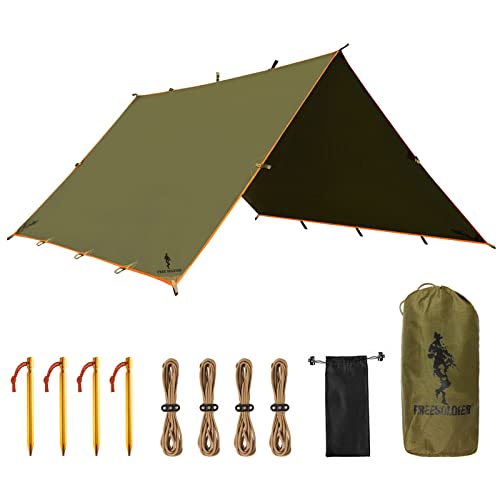
FREE SOLDIER Waterproof Portable Tarp Multifunctional Outdoor Camping Traveling Awning Backpacking Tarp Shelter Rain (Brown 10×10.5ft) Best for most families
- Creates a waterproof, wind-blocking barrier to reduce convective and evaporative heat loss.
- Adapts to multiple tasks: shelter, groundsheet, stretcher, gear wrap, or privacy screen.
- Provides rainwater catchment and a large, visible surface for signaling.
- Reinforced tie-outs and durable fabric enable secure anchoring and repeated reuse.
 info@emerggear.com