Whistle
Why you need this: Carry this emergency whistle to reliably summon help fast, so you and your loved ones are found quickly when disaster strikes.A whistle is a compact, high-visibility signaling tool that turns a small burst of breath into a loud, attention-grabbing sound. Simple yet powerful, it cuts through wind, traffic, and crowd noise when your voice cannot. In emergencies or everyday accidents, a whistle helps you alert others quickly, communicate over distance, and conserve energy while waiting for assistance. Because it has no batteries, apps, or moving parts to rely on, a whistle works when power and networks fail and when panic makes it hard to shout.
In practical preparedness, a whistle is a reliable backup for your phone and voice. Whether you’re navigating a storm, signaling from a vehicle breakdown, or calling for help at home, this palm-sized tool can be the difference between being heard and being overlooked. The classic distress signal—three short blasts, repeated—is widely recognized and easy to remember under stress, making a whistle one of the most cost-effective, lightweight, and versatile safety devices you can carry.
Beyond emergencies, a whistle aids in coordination during outdoor activities, group travel, and workplace safety drills. It is equally useful for adults and children, for solo hikers and large teams, and in quiet suburbs or noisy job sites. If your preparedness plan includes first-aid, lighting, and shelter, it should also include a whistle for rapid signaling.
How It Works
A whistle creates sound by forcing air through a narrow channel where it strikes a sharp edge, generating oscillations that resonate inside a chamber. The shape of the air channel and chamber determines the pitch, while the airflow determines the loudness. Some models contain a small ball (commonly called a “pea”) that modulates the tone to make a trill; others are “pealess,” engineered to produce a piercing, consistent blast that performs well in cold or wet conditions.
- Air channel and edge: Directs your breath across a blade-like surface to initiate vibration.
- Resonance chamber: Amplifies the oscillation into audible sound; size and shape set the pitch.
- Pea vs. pealess: A pea adds a rolling trill; pealess designs emphasize reliability in rain, surf, or freezing temperatures.
- Multi-chamber designs: Some whistles produce multiple tones at once to improve detection over background noise.
- Volume (dB): Many emergency whistles reach 100–120 dB at close range, increasing the chance of being heard over distance.
- Frequency range: Higher-pitched tones (often around 3–5 kHz) stand out against common environmental noise and are easier to locate.
- Directional control: Slightly rotating or cupping the whistle with your hand can help “aim” the sound toward listeners.
When The whistle Helps Most
- Natural disasters: After earthquakes, hurricanes, tornadoes, or floods, use a whistle to signal rescuers through dust, debris, or high winds when shouting is exhausting or impossible.
- Home accidents: If you fall in the bathroom, get trapped in a basement or stairwell, or lose your voice, a whistle helps family or neighbors find you quickly.
- Workplace situations: In warehouses, construction sites, and large facilities, a whistle can cut through machinery noise to call for help, warn of hazards, or coordinate teams.
- Vehicles: During a breakdown, after a minor crash in a remote area, or when stranded off-road, a whistle helps draw attention without draining your phone battery.
- Outdoor activities: Hiking, trail running, paddling, skiing, climbing, camping, and boating all benefit from a loud, lightweight signal to reconnect with a group or call for rescue.
- Water environments: On lakes, rivers, or the ocean, a whistle is essential for life jackets and small craft where engine noise and wind reduce voice range.
- Crowded events: In busy public spaces, festivals, or parks, a whistle can rapidly draw attention in a medical or safety emergency.
- For children and older adults: A whistle attached to a bag, zipper, or lanyard offers a simple, memorable way to summon help.
Strengths, Suitability & Limitations
Strengths
- Reliable: No batteries or apps; works in power outages and low-signal areas.
- Loud for its size: Projects farther and clearer than most shouting, especially in wind or cold.
- Lightweight and inexpensive: Easy to keep multiples in kits, vehicles, and jackets.
- Simple to use: Effective even for children or injured people with limited breath.
- Versatile signal: Works for distress, coordination, and deterrence of nearby hazards by drawing attention.
What It’s Not For
- Not a medical treatment: It summons help; it does not replace first-aid or emergency services.
- Not animal defense: It may startle some wildlife but should not be relied on as protection.
- Not a substitute for marine horns or vehicle signals: It complements, not replaces, specialized signaling equipment.
- Not a toy: Treat it as safety gear to avoid nuisance use and accidental hearing damage.
Limitations and safety considerations
- Hearing safety: Do not blow near anyone’s ear; prolonged or close-range blasts can damage hearing.
- Hygiene: Keep it clean; avoid sharing mouthpieces without sanitizing.
- Lanyard safety: Use breakaway lanyards to reduce snagging or strangulation risks.
- Weather effects: Extreme cold can stiffen some materials; choose designs proven for wet/freezing conditions.
- False alarms: Know the distress pattern and local rules to avoid confusion or fines.
What to Look For When Buying a whistle
Choosing the right whistle increases your odds of being heard when it counts. Focus on performance, durability, and ease of use, and avoid low-quality imitations that may fail under stress.
- Sound output: Look for strong, piercing volume often rated around 100–120 dB at 1 meter. Multi-tone or dual-chamber designs can improve detection through ambient noise.
- Pea vs. pealess design: Pea whistles add a trill that some rescuers find directional; pealess designs typically perform better in rain, heavy spray, and freezing conditions.
- Material quality: Durable plastics (such as impact-resistant polymers) or corrosion-resistant metals are common. For marine use, consider non-corroding materials with drain holes.
- Build quality: Check for solid seams, reinforced attachment points, and a sturdy key ring hole or clip that won’t snap under load.
- Ergonomics and size: A mouthpiece that seals easily and a body you can grip with gloves matter in cold or wet weather.
- Visibility: High-visibility colors and reflective elements make it easier to locate in a pack or dim light.
- Floatation and drainage: For water sports or boating, a whistle that floats and drains quickly prevents muffled blasts.
- Compliance: Favor whistles that indicate conformity with recognized safety or maritime/lifejacket standards relevant to your region.
- Attachment options: Breakaway lanyards, clips for shoulder straps, and sturdy split rings help you keep the whistle accessible.
- Temperature and impact performance: Look for assurances of function in cold, wet, and drop scenarios typical of outdoor use.
- Avoid counterfeits: Extremely low prices and poor fit-and-finish can signal imitations that underperform; examine reviews and construction carefully.
For families or teams, consider buying multiple whistles at once so each person has one on-hand and you can stage backups in vehicles and kits.
Placement, Storage & Readiness
Accessibility is everything. A whistle you can’t reach under stress won’t help you. Stage them where you live, work, and travel so one is always within arm’s reach.
- On person: Attach to a zipper pull, backpack strap, or keychain. Keep it outside main compartments for instant access.
- Home locations: Nightstand, bathroom cabinet, and near exits. Consider one per floor and in children’s rooms.
- Vehicles: Glove box, center console, sun visor, or attached to an emergency hammer or seatbelt cutter.
- Outdoor gear: Clip to life jackets, PFDs, hiking packs, and ski jackets; stash extras in first-aid kits and dry bags.
- Workplace: Keep one on a badge lanyard (breakaway), tool belt, or within safety stations.
- Maintenance: Monthly quick test: two or three short blasts to verify sound; inspect for cracks, UV damage, or loose attachments.
- Hygiene and care: Rinse after saltwater use; periodically wash with mild soap and water; air dry before storage.
- Avoid common mistakes: Don’t bury it deep in a pack; don’t use non-breakaway cords; don’t store in extreme heat for long periods.
How to Use It Properly
- Stay safe and visible: Move to a secure spot if possible, away from immediate hazards. Face open space to project sound.
- Grip and position: Hold the whistle so the air channel is unobstructed. Create a light seal with your lips around the mouthpiece.
- Know the signal: For distress, blow three short blasts, pause, and repeat. This pattern is widely recognized.
- Breathe efficiently: Use steady breaths from your diaphragm; short, sharp blasts carry well and reduce fatigue.
- Pause and listen: After signaling, wait to hear responses like shouts, whistles, or sirens; then repeat as needed.
- Aim the sound: Slightly rotate your body or cup your hand behind the whistle to direct sound toward likely rescuers.
- In water: Keep your head above the surface, blow between waves, and keep the whistle attached to your PFD so you don’t drop it.
- Protect hearing: Hold the whistle away from ears (yours and others). Avoid continuous long blasts at close range.
- Conserve energy: Use cycles of signaling and rest; continue the pattern until help arrives or conditions change.
Practice a few times in a safe environment so the motion is familiar. In an emergency, muscle memory helps you signal clearly without overthinking.
Final Summary
A whistle is a small tool with outsized impact: simple, reliable, and loud when you need it most. It excels when batteries die, voices fade, and chaos drowns out ordinary calls for help. By choosing a well-built whistle, staging them in key locations, and learning the basic three-blast distress signal, you give yourself and your loved ones a fast, effective way to be heard.
Add at least one whistle to every kit and vehicle, keep one on your person, and test them regularly. Preparedness is about layers—medical, light, shelter, and communication. A whistle is the lightweight layer that helps turn an emergency into a rescue.
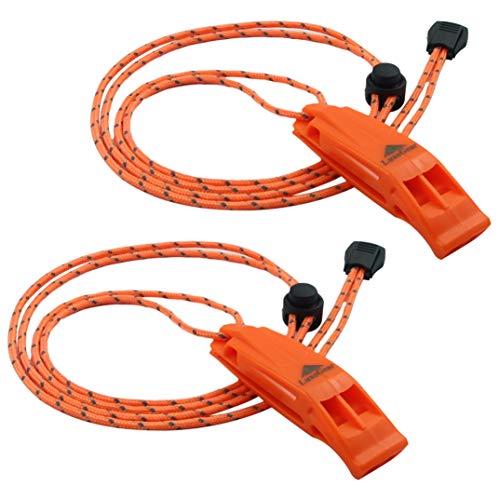
Emergency Whistles with Lanyard Safety Whistle Survival Shrill Loud Blast for Kayak Life Vest Jacket Boating Fishing Boat Camping Hiking Hunting Rescue Signaling Kids Lifeguard Plastic 2 Pack Best for most families
- Loud output carries farther than voice; penetrates wind, surf, and dense cover.
- No batteries or network; signals when power, radios, or phones are unavailable.
- Pea-less mechanism works wet and in freezing conditions; no moving ball to jam.
- Standard distress pattern: three short blasts simplify communication with rescuers.
 info@emerggear.com