Car Fire Blanket
Why you need this: You need this fire blanket to stop fires before they escalate, protecting your family and vehicle when emergencies strike.Car Fire Blanket: The Complete Guide to Safety, Selection, and Smart Use
A car fire blanket is a heavy, heat-resistant cover designed to smother small fires by cutting off oxygen and blocking radiant heat. Whether you drive daily, manage a small fleet, or value preparedness at home and on the road, this compact safety tool can help turn a dangerous flare-up into a manageable situation. In everyday accidents—like a small engine bay fire, a cooking mishap in a camper, or a battery pack flare on personal electronics—a car fire blanket offers a fast, low-maintenance, and clean way to contain flames while you evacuate and call for help.
Unlike extinguishers that spray chemicals, a car fire blanket functions as a reusable or single-use cover that you place over the fire source. It’s intuitive to operate, requires no pressure checks, and won’t leave powder residue that can damage interiors or sensitive components. While it’s not a replacement for emergency services, it can buy valuable time, limit heat and smoke spread, and help protect nearby occupants and property until professionals arrive.
How It Works
The principle behind a car fire blanket is simple: deny the fire oxygen and limit heat transfer. When the blanket is deployed over a flame, it forms a barrier that suffocates the fire and shields nearby surfaces from radiant heat. Many blankets for vehicle and workshop use are made from fiberglass or high-silica fabrics, often coated with silicone, graphite, or vermiculite to improve heat resistance and reduce smoke absorption.
- Smothering action: The blanket blocks oxygen, one side of the fire triangle (heat, fuel, oxygen), helping to halt combustion on small, contained fires.
- Radiant heat blocking: Dense, heat-rated fabrics reflect and absorb heat, helping protect nearby parts and people.
- Containment: When fully covering a source, the blanket can limit flame spread and embers, reducing secondary ignition risks.
- No residue: Unlike many extinguishers, a car fire blanket leaves no corrosive powder, which is helpful around engines, interiors, and electronics.
When The car fire blanket Helps Most
- Vehicles: Early-stage fires in the engine bay or undercarriage, small fuel drips that ignite, minor interior upholstery flare-ups, or to help shield occupants from radiant heat while evacuating.
- Natural disasters: During wildfire embers landing on vehicles or outdoor gear, it can provide a temporary barrier while you move to safety.
- Home accidents: Small kitchen flare-ups in a garage apartment or RV, or a charging device that begins to smoke—use to isolate the item and reduce spread.
- Workplace situations: Workshops, garages, and warehouses with hot work, light fabrication, or battery charging stations where incipient flames can be smothered quickly.
- Outdoor activities: Camping stoves, portable grills, or small campfire flare-ups that need immediate control and a clean suppression method.
Strengths, Suitability & Limitations
Strengths
- Fast and intuitive: Pull, cover, and hold—no complex mechanics or pressure checks.
- Clean suppression: No powder residue, minimal cleanup, and reduced collateral damage.
- Heat shielding: Helps protect people and nearby components from radiant heat.
- Low maintenance: No gauges to inspect or propellants to refill; simple periodic checks are enough.
- Portable and versatile: Works in cars, RVs, garages, boats, and small work areas.
What It’s Not For
- Large, advanced fires: If flames are widespread, producing heavy smoke, or involving structural materials, evacuate and call emergency services immediately.
- High-energy battery thermal runaway: For significant lithium-ion battery events, blankets may contain and shield but typically cannot extinguish thermal runaway. Keep distance and call professionals.
- Pressurized fuel leaks: Jetting flames or active fuel sprays require specialized suppression and professional response.
- Hazardous chemicals: Do not use for reactive materials or unknown chemical reactions without expert guidance.
Limitations and safety considerations
- Size matters: A blanket that is too small may not fully cover the fire, reducing effectiveness.
- Heat soak: Fabrics can become very hot; use hand protection and avoid lifting too soon.
- Re-ignition risk: Some fires may reignite once the blanket is removed; allow time for cooling and monitor closely.
- Visibility and air quality: Smoke can still accumulate; maintain a safe exit route and avoid inhalation.
- Training helps: A quick practice on how to deploy the blanket can make a major difference in an emergency.
What to Look For When Buying a car fire blanket
Choosing the right car fire blanket is about matching materials, size, and build quality to your environment. A well-made blanket can perform reliably when seconds count.
- Material and heat rating: Look for fiberglass or high-silica fabrics with heat-resistant coatings. Verify stated temperature ranges and intended use (vehicle, hot work, or general fire blanket).
- Coatings and finish: Silicone or vermiculite coatings can boost heat resistance and help resist fluids. Smooth finishes may reduce fiber shedding.
- Stitching and edge reinforcement: Bound edges and robust stitching help the blanket maintain integrity under stress and repeated handling.
- Pull tabs and handles: Integrated handles or tabs improve speed and control when deploying, especially from a storage pouch or canister.
- Size and weight: Ensure it’s large enough to cover the likely hazard. A compact blanket suits small interior fires; larger, heavier blankets can cover most of a vehicle. Balance portability with coverage.
- Ease of storage: Slim, clearly labeled pouches or hard cases help you mount the blanket in accessible locations.
- Standards and labeling: Seek clear documentation and labels indicating testing or compliance with recognized fire safety benchmarks (for example, standards used for fire blankets or hot-work blankets). Review the manufacturer’s guidance for approved use cases.
- Reusability and disposal: Some blankets are single-use after exposure to fire. If reusability is advertised, verify care instructions and inspection criteria.
- Documentation: Simple instructions, diagrams, and safety warnings should be included and easy to understand.
Beware of low-quality imitations. Red flags include vague or missing specifications, unrealistic heat ratings, flimsy stitching, or unlabeled pouches. If the blanket lacks clear instructions, safety warnings, or performance details, consider a higher-quality option.
Placement, Storage & Readiness
Proper placement ensures your car fire blanket is reachable when you need it most. The best blanket does little good if it’s hidden or jammed under gear.
- In vehicles: Mount or stow in a quick-access location—behind a seat, under a passenger seat, in a door pocket, or in the trunk with a clear label. Avoid burying it under cargo.
- In garages and workshops: Store near exits, charging stations, and hot-work areas so you can deploy while maintaining a safe escape route.
- In RVs and boats: Place one near the galley or engine compartment, and another near the main exit if space allows.
- Visibility: Label the storage pouch clearly and brief regular drivers or family members on its location.
- Inspection: Every few months, check for tears, delamination, burns, or contamination. Ensure pull tabs are visible and the pouch closes securely.
- Environment: Keep away from direct heat sources, oils, and chemicals that might degrade the fabric or coatings.
- Readiness drill: Practice removing the blanket from its pouch and unfolding it safely so deployment is second nature.
How to Use It Properly
- Assess from a safe distance. If the fire is small and contained, and you have a clear exit route, proceed. If flames are spreading or smoke is heavy, evacuate and call emergency services.
- Call for help early. Alert others and contact emergency services before or immediately after deployment.
- Release the blanket. Pull the tabs or handles to remove it from the pouch. Hold it up as a shield between you and the fire to block heat.
- Protect your hands and face. If available, use heat-resistant gloves. Keep your face turned slightly away from the flame and stay low to avoid smoke.
- Approach carefully. Move from the upwind side if possible. Do not open the hood fully on a vehicle fire, as this can introduce oxygen and cause a flare-up. If needed, crack it slightly to slide the blanket in place.
- Cover completely. Place the blanket gently over the fire source, aiming for full coverage with adequate overlap. Do not throw it from a distance; controlled placement reduces the chance of fanning flames.
- Shut off ignition/power. If it is safe to do so, turn off the engine or disconnect power to reduce heat and fuel sources.
- Hold and wait. Keep the blanket in place. Do not lift it to “check” the fire. Allow sufficient time for cooling and for responders to arrive.
- Monitor for reignition. After professional guidance or adequate cooling time, remove carefully. Be prepared to redeploy if you see smoke or a glow.
- After-use steps. Ventilate the area, avoid touching hot surfaces, and inspect the blanket. If damaged, contaminated, or labeled single-use, retire it responsibly and replace it.
Important: For suspected lithium-ion battery thermal runaway (e.g., sustained hissing, popping, intense heat), a car fire blanket may help contain flames and reduce radiant heat, but it likely will not extinguish the event. Maintain distance, evacuate, and wait for trained responders.
Final Summary
A car fire blanket is a compact, reliable tool for rapid fire control in vehicles, garages, RVs, boats, and everyday environments. It works by smothering flames, blocking radiant heat, and limiting spread—without the mess of powder-based agents. While it cannot replace professional response or suppress large, advanced fires, it excels at early intervention during small, contained incidents.
Choose one with durable materials, reinforced edges, clear labels, and a size that fits your risks. Store it where it’s immediately accessible, review the instructions, and practice a quick deployment drill. With the right preparation, a car fire blanket can help protect people, property, and peace of mind when the unexpected happens.
Prepare now, stay calm, and act safely. A few moments spent on readiness today can make all the difference in an emergency.
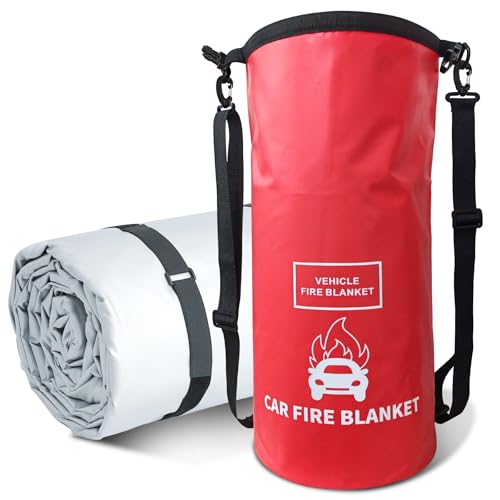
Vehicle Fire Blanket, Emergency Fire Extinguisher Blanket for Car,Survival Safety Fire Blanket for Automobiles, Motorcycles, Warehouses, House, Camping in The Wilderness (13.1x19.6ft) Best for most families
- High-temperature, nonflammable fabric starves oxygen to slow or stop open flames.
- Blocks radiant heat and reduces smoke release, protecting people and nearby assets.
- Limits fire spread when water or foam is unavailable or unsafe.
- Fast, simple deployment; creates a containment barrier while responders approach.
 info@emerggear.com