Car Jack
Why you need this: When a flat hits during storms or evacuations, a car jack kit gets your family back on the road quickly and safely.A car jack is a compact lifting tool designed to raise part of a vehicle so you can change a tire, inspect underbody components, or perform light maintenance. In simple terms, it converts your effort into vertical lifting force. When a tire goes flat on a lonely road, when you need to rotate tires in the driveway, or when a minor fender-bender bends a splash guard, a reliable car jack can turn a stressful moment into a solvable task. Having a dependable car jack in your vehicle and garage is a cornerstone of road safety and everyday preparedness.
Why does it matter? Vehicles are heavy, and even routine tasks like swapping a wheel demand controlled lifting. A properly chosen, correctly used car jack minimizes risk and reduces downtime. It helps you get back on the road faster after unexpected punctures and supports basic DIY vehicle care. In emergencies or everyday mishaps, the right tool paired with the right technique can prevent secondary damage and keep you safe.
How It Works
Although designs vary, every car jack follows the same basic principle: apply force at a convenient point and translate it into vertical lift under the vehicle at a manufacturer-approved jacking point. Common mechanisms include:
- Scissor jacks: A threaded screw runs through a diamond-shaped frame. Turning the screw draws the arms together and lifts the saddle upward. They are compact, light, and typical in many factory roadside kits.
- Hydraulic bottle jacks: A small hand pump moves hydraulic fluid through valves into a cylinder. Pascal’s law multiplies your input force to raise the piston and lift the load. They are powerful for their size, but need adequate lift height clearance.
- Hydraulic floor jacks: A wheeled body with a long handle and articulated arm lets you position the saddle precisely and lift quickly. They offer stability and speed, ideal for garages and flat surfaces.
- Pneumatic or inflatable options: Some jacks use compressed air or other inflation methods to elevate a load on soft ground or sand. They can be useful off-road but require careful setup and attention to stability.
- Mechanical ratcheting/farm utility jacks: Lever-and-ratchet systems provide high lift range for specialized tasks, often in off-road or utility contexts. These demand skill and strict adherence to safety practices.
Across all types, the essentials remain the same: correct capacity, stable footing, precise placement, and slow, controlled lifting. Always complement lifting with wheel chocks and, when working near or under a vehicle, properly rated jack stands.
When the Car Jack Helps Most
- Roadside tire changes: Safely lifting a wheel to replace a flat or rotate tires during routine maintenance.
- Minor bodywork and inspections: Gaining access to splash guards, undertrays, or brake components for quick checks and simple fixes.
- Natural disasters: After storms or floods, carefully lifting a vehicle corner to remove small debris lodged in wheel wells or under bumpers, provided the ground is firm and stable.
- Home accidents: Elevating a corner of a heavy item (like a lawn trailer) just enough to replace a wheel or insert moving sliders—only within rated limits and on secure footing.
- Workplace situations: In garages, farms, or job sites, lifting equipment or trailers for routine adjustments—again, within rating and using proper supports.
- Vehicles beyond passenger cars: Light trucks, SUVs, and crossovers, as long as the jack’s capacity and lift height match the vehicle’s requirements.
- Outdoor activities: Off-road recovery tasks such as lifting a stuck wheel to place traction aids—only if the surface is stabilized and additional support is used.
Important reminder: Never crawl under a vehicle supported only by a jack. If work requires any part of your body to be under the vehicle, use jack stands on a solid, level surface and follow all safety practices.
Strengths, Suitability & Limitations
Strengths
- Portability: Many designs are compact enough for a trunk or under-seat compartment.
- Versatility: Suitable for tire changes, light inspections, and quick adjustments.
- Mechanical advantage: Jack mechanisms multiply your input force, enabling controlled lifting with modest effort.
- Time-saver: A ready-to-use jack shortens roadside delays and reduces dependency on outside help for simple tasks.
What It’s Not For
- Not a support device: A car jack lifts; it is not a stand. Do not rely on it to support a vehicle during any work under the chassis.
- Not for overloaded lifting: Never exceed the rated capacity. Consider vehicle weight distribution and the jack’s maximum lift height.
- Not for unstable surfaces without preparation: Soft ground, slopes, and loose gravel can cause shifting. Stabilize or relocate before lifting.
Limitations and safety considerations
- Ground conditions: Use a solid, level base. A jack pad or sturdy board may be necessary on soft soil or asphalt in hot weather.
- Lift points: Always use manufacturer-specified jacking points to avoid damage to pinch welds, suspension, or body panels.
- Controlled lowering: Fast or uneven lowering can cause slips. Practice gentle, predictable release.
- Maintenance: Hydraulic units can leak or lose performance if neglected. Regular inspection is essential.
- Environmental factors: Extreme cold or heat can affect hydraulic behavior and ground stability.
What to Look For When Buying a Car Jack
Choosing the right car jack comes down to matching your vehicle, usage, and storage needs. Focus on these essentials:
- Capacity rating: Select a capacity appropriate for your vehicle class. A higher rating adds safety margin, but ensure the jack remains portable enough for your kit.
- Minimum and maximum lift height: Low-profile models fit lowered cars; higher-lift designs serve SUVs and trucks. Confirm the jack can reach your vehicle’s jacking points and lift high enough for your task.
- Construction and materials: Sturdy steel is durable; aluminum offers lighter weight. Look for robust frames, quality welds, and a reinforced saddle.
- Hydraulic quality (if applicable): Smooth pump action, a precise release valve, and effective seals make lifting and lowering predictable.
- Saddle design and adapters: A rubberized or textured saddle improves grip; pinch-weld or axle adapters protect contact points.
- Portability: Consider weight, handle design, and whether a carry case is included for trunk storage.
- Stability features: Wide base plates, dual-caster floor jacks, or included base pads help on less-than-ideal surfaces.
- Compliance and testing: Look for evidence of compliance with recognized safety standards applicable in your region.
- Serviceability: Availability of seals, hydraulic fluid instructions, and clear user guidance helps the jack last longer.
- User-friendly details: Long handles for leverage, quick-lift features, or knurled grips can improve control.
Beware of low-quality imitations. Red flags include thin metal, rough or inconsistent welds, flimsy hardware, poor fitment, and vague labeling. If the capacity rating or instructions are unclear, choose a better-documented option. The cost of a reliable jack is small compared to the value of safety and a protected vehicle frame.
Placement, Storage & Readiness
Keeping your car jack ready means storing it intelligently and inspecting it periodically.
- In-vehicle storage: Place the jack where it is easy to reach—often in the trunk well—secured so it cannot become a projectile during sudden stops.
- Garage placement: Store floor jacks on level ground away from moisture. Keep the handle stowed and the saddle lowered when not in use.
- Upright for hydraulics: Hydraulic jacks should be stored upright to protect seals and prevent fluid migration. Periodically check for leaks.
- Inspection routine: Before trips, verify smooth lifting and controlled lowering without unusual resistance. Confirm no oil leaks, cracked welds, or bent components.
- Readiness kit: Pair your car jack with wheel chocks, a lug wrench, gloves, a flashlight, and reflective markers. These items increase safety and visibility.
- Avoid common mistakes: Don’t overload the jack, don’t lift on weak ground without a pad, and don’t leave a vehicle suspended without jack stands.
How to Use It Properly
Use this educational, general guide to understand the process. Always follow your vehicle’s manual and the jack’s instructions.
- Secure the area: Park on a level surface away from traffic. Turn on hazard lights. Engage the parking brake and place the transmission in Park (or in gear for manuals).
- Chock wheels: Chock at least one wheel on the opposite end of where you will lift to prevent rolling.
- Identify the jacking point: Consult the vehicle manual for approved lift points along the pinch welds, frame rails, or specified subframe areas.
- Prepare the base: If the ground is soft, place a sturdy board or jack pad under the jack to create a stable, level platform.
- Position the jack: Center the saddle under the correct lift point. Ensure everything is aligned and the jack is straight.
- Lift slowly: Pump or turn the mechanism with steady, even force. Watch the contact point to confirm the saddle stays properly seated.
- Support with stands: If you will work near or under the vehicle, place appropriately rated jack stands at approved support points, then gently lower the vehicle onto them.
- Perform the task: Replace the tire or complete the inspection while keeping hands and tools clear of pinch zones.
- Lower carefully: If using stands, raise the vehicle slightly to remove them, then lower the car slowly and smoothly until the wheel contacts the ground.
- Torque and re-check: Tighten lug nuts to the recommended torque once the vehicle is on the ground. Recheck after a short drive if you replaced a wheel.
- Stow the tools: Return the jack, chocks, and tools to their storage locations. Ensure everything is secure before driving.
- Post-use inspection: Wipe down the jack, look for new leaks or damage, and address any issues before the next use.
Safety reminders: Never exceed the jack’s rating. Do not place any part of your body under a vehicle supported only by a jack. Avoid lifting on sloped, soft, or oily surfaces. If conditions feel unsafe, stop and reassess.
Final Summary
A car jack is more than a convenience—it’s a core component of your safety and preparedness plan. With the right capacity, stable footing, and proper technique, it turns flat tires and minor roadside issues into manageable tasks. Choose a well-built jack matched to your vehicle, keep it maintained and accessible, and practice safe lifting habits.
Prepared drivers are safer drivers. Add a dependable car jack to your kit, pair it with wheel chocks and jack stands, and familiarize yourself with your vehicle’s lift points before an emergency occurs. The time you invest now pays off when it matters most—on the shoulder of a busy road, in your driveway, or out on a weekend adventure.
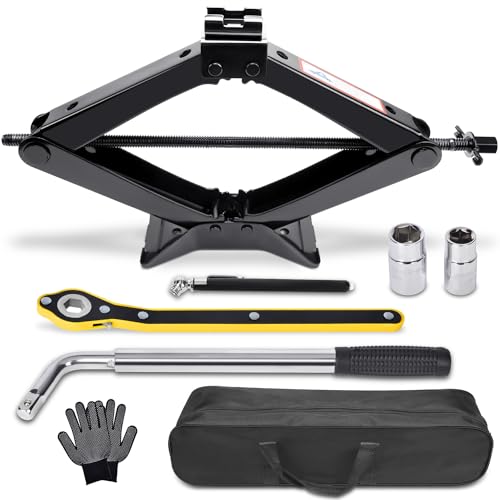
Scissor Car Jack 3 Ton (6610 lbs) Tire Changing Kit with Lug Wrench - Emergency Kit for Car, SUV, MPV Best for most families
- Mechanical advantage multiplies force, letting one person lift a vehicle corner for emergency repairs.
- Load ratings and solid contact surfaces reduce slippage and collapse risk when used correctly.
- Manual operation needs no power, functioning in blackouts, cold snaps, or fuel shortages.
- Compact storage keeps essential lifting capability in every vehicle, ready for evacuations.
 info@emerggear.com