Fire Extinguisher
Why you need this: Because small home fires escalate fast, a fire extinguisher lets you act immediately to protect your family and home before disaster strikes.A fire extinguisher is a portable safety tool designed to stop small, contained fires before they spread. In an emergency, seconds matter. Having the right extinguisher within reach can keep a kitchen flare-up, an electrical spark, or a garage mishap from becoming a full-blown disaster. While it is not a substitute for professional firefighters, a fire extinguisher adds a crucial layer of protection for your home, vehicle, or workplace.
Extinguishers are built around the basic idea of breaking the “fire triangle” of heat, oxygen, and fuel. Different extinguishing agents do this in different ways, and each is rated for specific fire classes. Class A covers ordinary combustibles like wood and paper; Class B covers flammable liquids; Class C covers energized electrical equipment; Class D covers combustible metals; Class K (also known as Class F in some regions) covers cooking oils and fats. Choosing a fire extinguisher with the proper rating is essential—using the wrong type can make a fire worse.
In everyday life, a reliable fire extinguisher helps you stay prepared for accidents like a grease flare on the stove, a small electrical fire behind a TV, or a spill of flammable liquid in the garage. It can buy precious time to evacuate, protect property, and prevent injuries. In a crisis, simple, effective tools are invaluable, and a correctly selected and maintained extinguisher is one of the most important pieces of safety equipment you can own.
Remember: personal safety comes first. If a fire grows larger than a small, contained area, creates heavy smoke, or threatens your escape route, evacuate immediately and call emergency services.
How It Works
A fire extinguisher is a pressurized cylinder containing a specific extinguishing agent. When you pull the pin and squeeze the handle, the valve opens, propellant forces the agent through the hose or nozzle, and the agent attacks the fire by removing heat, displacing oxygen, interrupting the chemical reaction, or creating a barrier between fuel and oxygen.
- The fire triangle: Extinguishers work by disrupting one or more elements of heat, oxygen, and fuel (and in many cases, the chain reaction).
- Common agents: Water (Class A), foam (Class A/B), dry chemical (ABC or BC) to interrupt the chemical reaction, carbon dioxide (CO2) to displace oxygen (Class B/C), clean agents for sensitive electronics, wet chemical for cooking oils (Class K), and dry powder for combustible metals (Class D).
- Key components: Cylinder, valve and handle, safety pin and tamper seal, pressure gauge (on stored-pressure types), discharge hose or nozzle, siphon tube, and mounting bracket.
- Ratings and performance: Look for clear class ratings (such as A, B, C, D, K) and numerical values that indicate relative firefighting power (for example, an A:B:C rating). Typical discharge time ranges from about 8 to 20 seconds, and effective range is usually several feet.
- Rechargeability and maintenance: Many units are designed to be recharged after use or at scheduled service intervals; always follow the manufacturer’s instructions and local safety codes.
When the fire extinguisher Helps Most
- Home accidents: Small cooking fires on the stovetop, oven flare-ups, toaster or space-heater sparks, fireplace embers, and dryer lint fires.
- Garage and workshop: Flammable liquids, solvents, fuels, oily rags, charging batteries, and power tools.
- Workplace situations: Offices with electronics, server rooms, retail stockrooms, light manufacturing areas, maintenance shops, and loading docks.
- Vehicles: Cars, trucks, RVs, boats, and motorcycles where a compact extinguisher can handle minor engine or fuel-related fires and buy time to evacuate.
- Outdoor activities: Campsites, grills, fire pits, generators, and seasonal yard work where a small spark can escalate quickly.
- Natural disasters: After earthquakes, storms, or power surges, when downed lines or damaged appliances can ignite small fires—only use an extinguisher if it is safe and you have a clear exit.
Strengths, Suitability & Limitations
Strengths
- Fast first response: Immediately tackle small, contained fires before they grow.
- Versatility: Different agents and ratings cover a wide range of fire classes and environments.
- Portable and accessible: Lightweight models can be mounted where you need them most.
- Protects people and property: Helps reduce injuries, smoke damage, and costly downtime.
- Simple to operate: The PASS method (Pull, Aim, Squeeze, Sweep) is easy to learn and remember.
What It’s Not For
- Large, spreading, or fast-growing fires that threaten your escape route.
- Fires involving unknown chemicals or materials when you’re unsure of the correct class of extinguisher.
- Gas leaks or situations with heavy smoke; evacuate and call emergency services.
- Substituting for sprinklers, alarms, or a comprehensive fire safety plan.
Limitations and safety considerations
- Limited discharge time and range—most units empty in seconds; you get one quick attempt.
- Using the wrong class can spread the fire (for example, water on grease or energized electrical equipment).
- Maintain a clear exit path behind you; never let the fire come between you and your way out.
- Some agents create residue that requires cleanup; CO2 can displace oxygen in confined spaces.
- Training and periodic practice matter; reading the label during an emergency costs time.
- After any use, the extinguisher must be serviced or replaced.
What to Look For When Buying a fire extinguisher
Choosing the right fire extinguisher is about matching the hazards you face with a reliable, compliant, and easy-to-use tool. Prioritize quality, safety ratings, and practicality over gimmicks. Beware of low-quality imitations that mimic labels but lack proper certifications or build quality.
- Correct class and rating: Pick an extinguisher rated for your primary risks (e.g., ABC for general home use, Class K for kitchens with cooking oils, Class D for metalworking). Higher numerical ratings usually indicate greater firefighting capacity.
- Recognized safety standards: Look for clear compliance with widely accepted testing and certification standards in your region. Ratings and labels should be legible and consistent.
- Build quality: A robust cylinder, reliable valve assembly, sturdy handle, and a well-fitted bracket are critical. Smooth trigger action and a secure safety pin improve usability under stress.
- Pressure gauge and tamper seal: A clear gauge (on stored-pressure types) helps with quick readiness checks. A tamper seal confirms it hasn’t been accidentally discharged.
- Size and weight: Larger extinguishers offer more agent but must be manageable for the person expected to use it. Balance capacity with the ability to operate it quickly and safely.
- Agent type and cleanup: Dry chemical is versatile but leaves residue; CO2 leaves no residue but can be less effective outdoors; clean agents are ideal for electronics; wet chemical is designed for cooking oils.
- Operating temperature range: Ensure the unit is suitable for your climate or placement (e.g., unconditioned garages, vehicles, or marine environments).
- Rechargeable vs. single-use: Rechargeable models can be serviced after use; single-use models are typically replaced. Choose based on expected use, maintenance options, and total cost of ownership.
- Clear instructions: Labels should be easy to read, with diagrams that match the PASS method and your extinguisher’s specific operation.
- Red flags to avoid: Missing or unclear ratings, inconsistent labels, suspiciously low weight for the stated capacity, poor fit-and-finish, no lot or manufacturing date, or packaging that overpromises performance.
Placement, Storage & Readiness
Where and how you store your fire extinguisher can determine whether it’s actually useful in an emergency. Keep units visible, accessible, and near exits—never buried in a cabinet or blocked by clutter.
- Home placement: Mount one in the kitchen (not directly above the stove), another in the garage or workshop, and at least one on each floor near an exit.
- Vehicles and boats: Securely mount an appropriately rated, compact extinguisher where the driver or operator can reach it quickly without becoming a projectile.
- Workplaces: Follow local code for spacing and mounting height; place near likely hazards and clearly mark locations.
- Mounting and orientation: Use the provided bracket; install at a height that’s easy to reach; keep it upright and secure.
- Temperature and environment: Avoid extreme heat, freezing conditions, or corrosive environments unless the unit is designed for them.
- Routine inspections: Monthly, ensure the gauge is in the green (if applicable), the tamper seal and pin are intact, the nozzle is unobstructed, the label is readable, and there’s no damage, rust, or leakage. Gently agitate dry chemical units if recommended by the manufacturer to prevent packing.
- Service intervals: Adhere to recommended maintenance, including professional inspections and periodic hydrostatic testing as required by local standards.
- After any discharge: Even brief use reduces pressure and agent; have the unit serviced or replaced immediately.
- Avoid common mistakes: Don’t hide the extinguisher behind cleaning supplies, don’t store it on the floor, and don’t place it where fire could block access.
How to Use It Properly
In an emergency, stay calm, keep a clear exit at your back, and remember the PASS method. Only attempt to extinguish small, contained fires. If at any point the fire grows, produces heavy smoke, or threatens your escape, evacuate immediately and call emergency services.
- Assess and alert: Confirm the fire is small and the correct extinguisher class is available. Alert others and call emergency services.
- Position yourself: Keep your exit behind you and stand at a safe distance.
- Pull the pin: Break the tamper seal to unlock the handle.
- Aim low: Point the nozzle or hose at the base of the fire, not the flames.
- Squeeze the handle: Apply controlled pressure to discharge the agent.
- Sweep side to side: Move the stream across the base of the fire until it appears out. Watch for re-ignition.
- Back away cautiously: Do not turn your back on the fire. Ensure it is fully extinguished.
- Follow up: Ventilate the area, monitor for hot spots, and have the extinguisher recharged or replaced.
Important safety reminders: Never use water on grease or electrical fires. CO2 and some agents can reduce oxygen—use caution in confined spaces. On CO2 units, avoid touching the discharge horn if it can frost over. When in doubt, evacuate.
Final Summary
A well-chosen, properly placed fire extinguisher is a powerful first line of defense against everyday accidents and unexpected emergencies. Match the extinguisher to your hazards, mount it where you can reach it fast, and build a habit of quick monthly inspections. Practice the PASS method and make sure everyone in your home or workplace knows where extinguishers are and how to use them.
Preparation saves lives and property. Equip each level of your home, your vehicles, and your workspace with the right extinguishers, review your evacuation plan, and keep them maintained. Investing a few minutes today can deliver crucial seconds when they matter most.
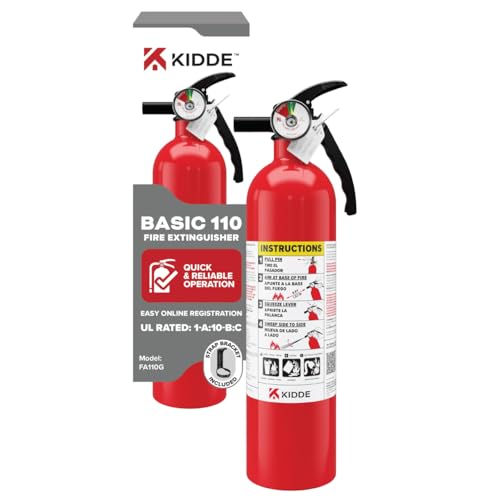
Kidde, FA110G, Multi Purpose Fire Extinguisher for Home, Office, Dorm, Residential, 1A10BC Best for most families
- ABC agent handles wood, flammable liquids, and live electrical fires.
- Dry chemical interrupts combustion, slowing growth and smoke.
- Nonconductive discharge reduces shock risk around energized equipment.
- UL-listed units with gauges enable quick readiness checks under stress.
 info@emerggear.com