Phone Charger with Voltmeter
Why you need this: When disaster strikes, a car charger keeps phones powered and monitors your vehicle battery, ensuring communication, navigation, and safety for your family.A phone charger with voltmeter combines a familiar charging function with a built-in voltage display, giving you real-time insight into the power source feeding your devices. That simple readout can dramatically improve everyday safety and reliability, and it becomes even more valuable during emergencies. By showing whether your car battery, portable power station, wall outlet adapter, or solar setup is delivering stable power, this tool helps you decide when to plug in, when to conserve energy, and when to troubleshoot. In short, a phone charger with voltmeter helps protect your phone, preserves precious battery life in critical moments, and offers quick diagnostics that can prevent small hiccups from turning into bigger problems.
When the unexpected happens—storms, outages, travel delays, or workplace mishaps—having a charger that also reports voltage turns guesswork into clarity. You can immediately see if a port is underpowered, if a car battery is weak, or if an inverter is behaving. That means fewer surprises, safer charging, and smarter decisions about where and how to charge. In emergencies, knowledge is power, and this compact tool gives you exactly that.
How a Phone Charger with Voltmeter Works
At its core, a phone charger with voltmeter includes a power conversion circuit to deliver the appropriate charging voltage and a small display that shows the voltage present at the input (such as a vehicle’s 12V system) or the output (the USB port itself). Different designs may show one or both, but the idea is the same: real-time visibility of electrical conditions that impact charging speed and safety.
- Power input: Can be a vehicle’s 12V/24V outlet, a wall adapter (AC to DC), a portable power station, or a panel-mount source in boats and RVs.
- Conversion: Internal electronics step the power up or down to match common USB standards (5V, 9V, 12V for fast-charging protocols), keeping your phone within safe limits.
- Display: An LED or LCD shows voltage in real time. Some units display the input supply (useful for checking car battery health), others show the USB port voltage (useful for spotting sag or poor cables), and some let you toggle between them.
- Protection: Quality models include over-voltage, over-current, short-circuit, and temperature safeguards to protect both the charger and your device.
- What the numbers mean: For vehicle inputs, roughly 12.6V indicates a healthy resting battery; 13.7–14.7V is common while the engine is running. For USB outputs, around 5.0V is typical, with slight variation under load.
Note that readings can change while charging, and voltage sag is normal under load, especially with longer or thinner cables. The voltmeter is there to inform your decisions, not to replace professional diagnostic tools.
Situations Where a Phone Charger with Voltmeter Helps Most
- Natural disasters: During hurricanes, snowstorms, earthquakes, or wildfires, monitor car battery health before and during phone charging, and confirm stable output from inverters, generators, or portable power stations.
- Home accidents: After a tripped breaker, water spill, or damaged extension cord, quickly verify if a USB port or adapter is providing safe voltage before risking your phone.
- Workplace scenarios: On job sites, at events, or in temporary workspaces, confirm power quality from power strips, conference-room hubs, or mobile power carts to keep communications up.
- Vehicles: In cars, trucks, vans, RVs, or boats, check the state of the battery with the engine off, confirm charging system behavior with the engine on, and ensure a stable feed to your phone’s USB port.
- Outdoor activities: While camping, overlanding, fishing, hiking basecamps, or tailgating, monitor power from solar panels, portable batteries, and vehicle outlets so you can ration energy intelligently.
Advantages, Appropriate Uses, and Caveats
Strengths
- Real-time diagnostics: Instantly see if a power source is weak or unstable, preventing slow charging or unexpected phone shutdowns.
- Emergency awareness: Helps you conserve limited energy and decide when to charge or hold off to protect battery reserves.
- Device safety: Voltage readouts and built-in protections reduce the risk of over-voltage damage.
- Versatility: Useful in vehicles, at home, in the office, and outdoors with portable power setups.
- Compact and affordable: Easy to keep in a glove box, emergency kit, or backpack without adding bulk.
What It’s Not For
- Not a replacement for professional multimeters or battery analyzers.
- Not intended to diagnose complex electrical faults in vehicles or buildings.
- Not designed for high-voltage or mains wiring work.
- Not a waterproof or submersible tool unless specifically rated.
Limitations and safety considerations
- Accuracy tolerances: Expect slight variance; most displays are for guidance, not lab-grade measurements.
- Load behavior: Voltage can drop when charging begins; use quality cables and ports to minimize sag.
- Heat and ventilation: Charging generates heat. Avoid direct sun on dashboards and keep vents clear.
- Parasitic draw: In some vehicles, leaving accessories plugged in can drain the battery over time.
- Moisture and debris: Keep ports dry and free of dust; avoid use if the charger or cable is damaged.
Buying Guide: What to Look For in a Phone Charger with Voltmeter
Choosing the right charger is about more than price. Focus on features that support safety, reliability, and the way you actually charge on the go.
- Compatibility and power: Ensure support for USB-C and/or USB-A, along with modern charging protocols like USB Power Delivery and recognized fast-charge standards. Match wattage (e.g., 20W, 30W, 45W+) to your device needs.
- Input type: Decide between a 12V vehicle plug, AC wall unit, panel-mount socket (for boats/RVs), or a portable battery pack with display.
- What the meter reads: Check whether the display shows input voltage, output voltage, or both. Input readings are great for car battery awareness; output readings help pinpoint cable or port issues.
- Display readability: Look for a bright, legible screen with good contrast and, ideally, clear digits you can read in daylight and at night.
- Measurement detail: A reasonable accuracy spec (for example, within ±0.1–0.2V for vehicle input) and a fast refresh rate improve usefulness.
- Safety certifications: Seek evidence of compliance with recognized safety and EMC standards (for example, UL, ETL, CE, or FCC, depending on your region).
- Protection features: Over-voltage, over-current, short-circuit, and temperature protections should be standard.
- Thermal design: Heatsinks, vents, or robust housings help prevent heat buildup during fast charging.
- Build and materials: Flame-retardant housings, solid connectors, and quality internal components withstand vibration and daily use.
- Cables matter: If the charger includes a cable, look for thick conductors and durable strain relief. For USB-C, an e-marker chip is important for higher wattage.
- Form factor and sizing: If panel-mounting, verify the cutout diameter and depth. For vehicle adapters, check space around the outlet to avoid blocking adjacent ports.
- Extra features: On/off switch for the display, multiple ports, amperage readout, or a toggle between input and output voltage can add real value.
- Beware of too-good-to-be-true claims: Extremely high wattage from tiny housings, vague safety claims, or unrealistic “capacity” numbers are red flags. Prioritize proven safety over flashy specs.
Storing, Staging, and Staying Ready
Preparation makes your charger more than a gadget—it becomes part of your readiness plan.
- Where to keep it: Glove box, center console, emergency kit, backpack, or desk drawer. Keep one where you’re most likely to need it.
- Environmental care: Avoid extreme heat or direct sun on dashboards. Store away from liquids and sharp objects.
- Inspection routine: Monthly or before a trip, check the display, ports, and cable for wear, frays, bent pins, or debris.
- Cleanliness: Dust ports gently with compressed air; never insert metal objects into a live port.
- Testing: Plug into a known-good source and verify the display reading, then confirm your phone charges as expected.
- Cables and adapters: Stage the right cable types (USB-C, Lightning, Micro-USB if needed) and keep spares sealed in small bags.
- For integrated battery packs: Top up every 1–3 months and keep between roughly 40–80% if storing long-term.
- Avoid common mistakes: Don’t leave it permanently plugged in if your vehicle outlet remains live with the ignition off, and don’t store it loose where it can get crushed.
Step-by-Step: Using Your Phone Charger with Voltmeter Safely
- Inspect before use. Ensure the charger and cable are dry and undamaged. If you notice melting, cracks, or a burnt smell, do not use it.
- Choose the power source. Vehicle outlet, wall adapter, portable power station, or panel-mount port—use the most stable option available.
- Plug in the charger first. Let the display turn on. If using a vehicle, consider checking the reading with the engine off and then again with the engine running.
- Note the baseline reading. For a car battery, around 12.6V is typical at rest; under 12.0V suggests a low battery. With the engine running, 13.7–14.7V is common. For USB outputs, roughly 5.0V is normal before load.
- Connect your phone. Use a short, quality cable. Watch the voltage for a moment—some drop under load is normal.
- Interpret behavior. If the voltage sags excessively or fluctuates, try a different cable or port. If a vehicle input reads unusually low, conserve power and consider starting the engine briefly if safe and appropriate.
- Monitor briefly, then let it work. Once stable, you don’t need to watch constantly. Keep the charger ventilated and away from heat sources.
- Finish and disconnect. Unplug the phone first, then the charger. Coil the cable loosely and store everything where you can access it quickly next time.
- If something seems off: Stop using the charger. Do not attempt repairs. Swap cables, try a different outlet, or consult a qualified technician for vehicle or electrical issues.
Final Summary
A phone charger with voltmeter turns everyday charging into an informed, safer routine and becomes a genuine asset in emergencies. By showing you what’s happening with your power source in real time, it helps prevent device damage, conserve energy when it’s scarce, and troubleshoot quickly without special tools.
Preparedness is about control and confidence—knowing when to plug in, when to conserve, and when to move to a different power source. Keep a phone charger with voltmeter where you’ll need it, pair it with quality cables, inspect it periodically, and you’ll have a small but powerful edge when the unexpected occurs.
Bottom line: For everyday reliability and emergency readiness, few small tools deliver more value than a well-built phone charger with voltmeter.
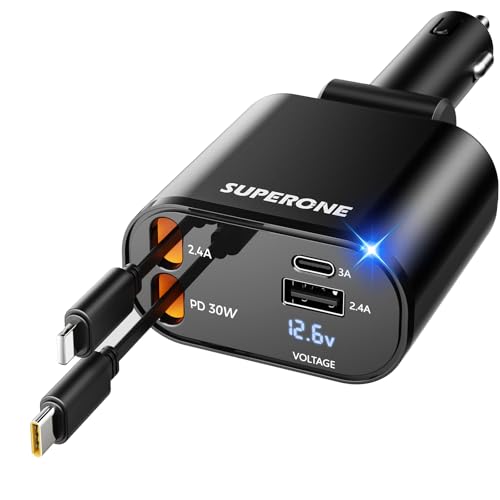
【Upgraded】 SUPERONE Retractable Car Charger 4 in 1, Fast Car Phone Charger with Cord 2.6ft, USB C and Apple Car Adapter, Compatible with iPhone 17 16 15/15 Pro Max/14/13/12/11, Galaxy, Pixel Best for most families
- Real-time voltage readout verifies source stability before connecting critical devices.
- Helps prevent deep discharge of vehicle or backup batteries during prolonged outages.
- Makes unsafe generator or inverter output visible before charging sensitive electronics.
- Compatible with vehicles, solar systems, and portable power stations for field use.
 info@emerggear.com