Reflective Triangle
Why you need this: In a roadside emergency, reflective safety triangles alert drivers, reduce crash risk, and keep you and loved ones safe until help arrives.Reflective Triangle: A Practical, High-Visibility Essential for Safer Emergencies
A reflective triangle is a foldable, high-visibility warning marker designed to alert oncoming people and vehicles to a hazard, breakdown, or temporary danger zone. Compact enough to live in a trunk or emergency kit, this simple tool leverages retroreflective surfaces and a universally recognized triangular shape to help prevent secondary accidents. Whether you’re pulling over with a flat tire, marking a small spill on a workplace floor, or guiding friends to a campsite after dark, a reflective triangle gives others the time and distance they need to react safely.
In emergencies, every second counts. The reflective triangle amplifies your visibility, especially at night or during bad weather, so others can see you sooner and slow down. It can be staged quickly, used by anyone, and requires no power to be effective. For many households and drivers, it’s one of the most cost-effective safety items you can carry—small, reliable, and life-saving when visibility matters most.
How It Works
A reflective triangle relies on two core principles: high-contrast color for daytime visibility and retroreflection for low-light conditions. The triangular frame is typically made from durable plastic with reflective bands on the edges. When headlights or flashlights shine on it, the reflective surface bounces light back toward the source, appearing bright to approaching drivers.
- Retroreflective surfaces: Microprismatic or beaded materials return light toward its origin, making the triangle appear bright at night.
- Fluorescent color panels: High-visibility red or orange panels improve contrast in daylight, dusk, and fog.
- Stability features: A weighted or wide base, anti-slip feet, and locking hinges help the triangle stay upright in wind and passing drafts.
- Foldable construction: Hinged arms and a compact case make it easy to store and deploy quickly.
- Optional illumination: Some designs add LEDs for active lighting; the reflective surfaces still function even if batteries run out.
When the Reflective Triangle Helps Most
- Vehicles and roadside events: Breakdowns, flat tires, fender-benders, or when jump-starting a battery on the shoulder.
- Natural disasters: Marking downed branches, blocked driveways, or makeshift detours after storms, floods, or earthquakes.
- Home accidents: Signaling a slippery driveway, steps under repair, or a short-term hazard while waiting for cleanup or assistance.
- Workplace situations: Warehouses, loading docks, and job sites where a temporary warning is needed for equipment, spills, or cordoned areas.
- Outdoor activities: Camping or trailhead areas after dark, guiding group members to a base camp, or marking gear near roads or parking areas.
Strengths, Suitability & Limitations
Strengths
- Highly visible: Designed to be seen at distance in both day and night conditions.
- Passive safety: Works without power; reflective surfaces remain effective for years when cared for.
- Fast to stage: Simple unfold-and-lock operation saves time in stressful moments.
- Portable and affordable: Compact case fits in most vehicles and emergency kits.
- Widely recognized signal: The triangular hazard shape communicates danger even across language barriers.
What It’s Not For
- Not a substitute for turning on your vehicle’s hazard lights or setting parking brakes.
- Not a replacement for professional traffic control at large incidents or construction sites.
- Not suited to extreme winds without adequate stability; reposition or remove if it becomes a projectile risk.
- Not a toy; keep away from children when near traffic or hazardous areas.
Limitations and safety considerations
- Reflectivity depends on light sources; in pitch-black areas without headlights, visibility is reduced.
- Blind curves, crests, or heavy rain/fog require greater placement distance and extra caution.
- Low-quality units can collapse or blow over easily; stability matters.
- If your local laws require a specific number of markers or distances, follow those regulations first.
What to Look For When Buying a Reflective Triangle
Quality varies widely. Choose a reflective triangle that is purpose-built for roadside and general safety, not a novelty marker. Look for the following characteristics:
- Compliance and standards: Check for adherence to recognized road-safety standards (for example, FMVSS 125 in some countries or ECE R27 in others). This indicates proven visibility and stability benchmarks.
- Reflective performance: Bright, uniform retroreflective bands with good viewing angles. Microprismatic technology often provides higher intensity.
- Color and contrast: Fluorescent orange/red panels improve daytime visibility and dusk performance.
- Stability features: Wide, weighted base; anti-slip feet; low profile against wind; firm locking hinges that do not wobble.
- Durable materials: UV-stabilized plastics and corrosion-resistant metal components to withstand heat, cold, and sun exposure.
- Build quality: Smooth edges, solid hinge pins, and secure latches that keep the triangle rigid and upright.
- Size and visibility: Full-size triangles (often around 43–45 cm per side) are easier to see than tiny novelty options.
- Ease of use: Intuitive fold-out mechanism and a protective case that opens quickly even with gloves.
- Optional enhancements: Additional reflectors, LED illumination, or a case that doubles as a weighted base can add performance.
Watch out for low-quality imitations. Common warning signs include flimsy joints, light plastic bases that topple in light wind, reflective tape that peels, or colors that fade quickly. If the triangle cannot stay upright or isn’t bright from a distance, it defeats its purpose.
Placement, Storage & Readiness
Where you store your reflective triangle and how you maintain it can determine whether it’s ready when you are.
- Best storage spots: Trunk or cargo area, under a seat, door pocket of a truck cab, or with your vehicle’s emergency kit. Keep it within quick reach.
- Regular inspection: Every few months, unfold it and check hinges, feet, and reflectors for cracks, peeling, or warping. Clean with mild soap and water—avoid harsh solvents.
- Cleanliness matters: Dust, mud, and road film reduce reflectivity. Wipe the reflective areas after use.
- Environmental care: Prolonged sun exposure in a hot car can age plastics. A protective case slows UV damage and prevents scratches.
- If using LED-enhanced models: Test batteries periodically and carry spares; the reflective surfaces still work without power.
- Staging practice: Rehearse unfolding and locking the triangle at home so you can deploy it calmly and quickly under stress.
- Avoid common mistakes: Don’t place it too close to the hazard, on unstable surfaces, or where it’s hidden by a curve or crest.
How to Use It Properly
- Secure the scene: Pull as far off the roadway as safe. Engage hazard lights and parking brake. If available, wear a high-visibility vest.
- Exit safely: Step out on the side away from traffic, check your surroundings, and keep pets or passengers inside and out of harm’s way.
- Unfold the triangle: Remove from its case, lock the hinges, and ensure the base is fully stabilized.
- Face oncoming traffic: Hold the triangle so its reflective surfaces will be seen by approaching drivers. Keep the triangle between you and traffic as you walk to place it.
- Place at a visible distance: Set the triangle on stable ground behind your vehicle or hazard, oriented toward oncoming traffic. Increase the distance for higher speeds, poor weather, hills, or curves. If you have more than one triangle, place additional units progressively farther back to create a visual “taper.” Always follow local regulations for exact distances.
- Double-check stability: Make sure it won’t tip in wind or from passing vehicles’ airflow. Reposition if necessary for maximum line-of-sight.
- Retrieve with care: When it’s time to pack up, walk facing traffic, fold the triangle, and store it. Inspect for damage and clean if needed.
Safety reminder: Your personal safety comes first. If conditions are too dangerous—such as zero visibility, severe storms, or heavy traffic—remain at a safe distance and call for professional assistance.
Final Summary
A reflective triangle is a small, reliable tool that delivers a big safety payoff. It increases your visibility, communicates caution instantly, and helps others slow down before they reach a hazard. From roadside breakdowns to at-home mishaps and workplace alerts, it’s an affordable, low-tech layer of protection that belongs in every vehicle and emergency kit.
Prepare now, not later. Choose a well-built, standards-compliant reflective triangle, store it where you can grab it fast, and practice quick deployment. When the unexpected happens, you’ll be ready to protect yourself, your passengers, and everyone sharing the road or workspace with you.
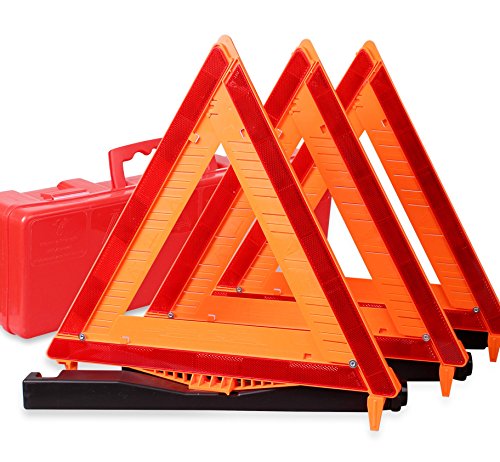
CARTMAN 3 Pack Warning Triangle DOT Approved Identical to United States FMVSS 571 125 Reflective Warning Road Safety Triangle Kit Best for most families
- Retroreflective panels return headlights, increasing night visibility and detection distance.
- Deploys in seconds; no power or maintenance required.
- Marks hazards, breakdowns, checkpoints, and evacuation routes in low-visibility conditions.
- Standard hazard shape recognized by drivers, aiding quick interpretation and safer maneuvers.
 info@emerggear.com