Tow Rope
Why you need this: In storms or evacuations, a tow strap restores mobility, frees stuck vehicles, and helps you protect loved ones when minutes matter.A towing rope is a high-strength line designed to connect a disabled vehicle or heavy load to a capable vehicle so it can be moved safely. Built from durable synthetic fibers and engineered to handle significant force, a towing rope is a compact, affordable tool that can turn a stressful breakdown, a slide into a ditch, or a storm cleanup into a manageable task. Whether you commute daily, off-road on weekends, or maintain a jobsite or farm, a towing rope adds a reliable layer of preparedness to your kit.
Unlike chains that can transfer harsh shocks or traditional straps that may offer minimal stretch, many modern ropes balance strength, flexibility, and shock absorption. The result is smoother, more controlled pulls that protect vehicles and equipment from sudden jolts. In emergencies, that means quicker extractions, fewer complications, and improved safety for everyone involved.
Importantly, a towing rope is not a replacement for professional towing in every circumstance, nor is it a lifting sling. But when used correctly—on rated recovery points and within its capacity—it can help you recover stuck vehicles, relocate obstacles, and move light-to-moderate loads with confidence.
How It Works
A towing rope transmits pulling force from a recovery vehicle to a disabled vehicle or load. Depending on the rope’s material and design, it may offer some elasticity to smooth out starts and reduce shock loads. This controlled stretch stores energy and then releases it progressively, helping to “pop” a vehicle free from mud, snow, or sand with less risk of sudden jerks.
- Load transfer: The towing vehicle applies force that the rope carries to the stuck or disabled vehicle.
- Elasticity (if applicable): Kinetic-style ropes stretch under load, reducing shock and improving traction during recovery.
- Static control: Low-stretch configurations provide steadier, more predictable towing for short distances on firm surfaces.
- Rated hardware: Properly sized shackles and rated recovery points ensure the force is applied safely and efficiently.
- Safety margin: The rope’s Minimum Breaking Strength (MBS) and Working Load Limit (WLL) define safe usage. Always stay well below those limits.
When The towing rope Helps Most
- Vehicle recoveries: Freeing cars, SUVs, trucks, ATVs, and UTVs stuck in snow, mud, ice, or sand.
- Post-storm situations: Moving small fallen trees, dragging heavy limbs, repositioning generators or light equipment out of flood-prone spots.
- Everyday roadside issues: Pulling a stalled vehicle off an intersection or shoulder to a safer location.
- Worksite and farm tasks: Repositioning trailers, small machinery, gates, fencing materials, or embedded posts (with care and proper angles).
- Outdoor adventures: Overlanding and camping recoveries, retrieving small watercraft to shore, and hauling firewood or gear in rugged terrain.
- Home projects: Assisting with moving heavy items around a yard, dragging debris to a curb, or guiding awkward loads across grass or gravel.
- Winter emergencies: Helping a neighbor out of a plowed-in parking spot or pulling a vehicle up a short, icy incline to level ground.
Strengths, Suitability & Limitations
Strengths
- Compact and portable: Easy to store in a trunk, under a seat, or in a toolbox.
- Smooth recoveries: Elastic designs reduce harsh jerks and distribute force more evenly.
- Versatile: Works across vehicles, small equipment, and debris-moving tasks.
- No power required: Useful when batteries are dead or winches aren’t available.
- Cost-effective: A high-impact tool that doesn’t require complex installation.
What It’s Not For
- Overhead lifting: A towing rope is not a crane sling; never lift people or loads overhead.
- High-speed towing: Not intended for long, on-road towing at traffic speeds.
- Unsafe anchor points: Never attach to a tow ball, axle tubes, thin sheet metal, or tie-down loops not rated for recovery.
- Permanently frozen loads: Extremely heavy, entrenched, or hazardous recoveries may require specialized equipment or professionals.
Limitations and safety considerations
- Capacity matters: Exceeding the rope’s WLL/MBS risks failure and dangerous recoil.
- Hardware integrity: Mismatched or unrated shackles and mounts are a common failure point.
- Heat and abrasion: Hot exhausts, sharp edges, and rough surfaces degrade fibers quickly.
- Legal compliance: Some regions restrict rope-based towing on public roads; a rigid tow bar may be required.
- Inspection required: Frays, cuts, melted fibers, or flattened spots indicate retirement.
What to Look For When Buying a towing rope
Choosing the right towing rope means looking beyond price. Pay attention to material science, construction, safety ratings, and documented testing. The goal is to maximize safety and durability while matching your vehicles and use cases.
- Material and stretch:
- Nylon/kinetic blends: Offer controlled stretch for smoother recoveries in mud, sand, and snow.
- Polyester/low-stretch: Better for steady, short-distance tows on firm ground.
- Polypropylene: Floats and is lightweight, but typically offers lower strength and heat resistance.
- UHMWPE (high-modulus fibers): Very high strength-to-weight and low stretch; check for abrasion protection.
- Strength ratings: Look for clearly stated Minimum Breaking Strength (MBS) and/or Working Load Limit (WLL). As a rule of thumb, select a rope whose MBS comfortably exceeds 2–3× the weight of the lighter vehicle for recovery scenarios.
- Diameter and length: Common lengths range from 20–30 feet (6–9 m). Longer ropes reduce shock but increase slack; shorter ropes offer more control but less flexibility in positioning.
- Eye loops and protection: Reinforced, well-stitched eyes with abrasion sleeves or chafe guards prolong service life.
- Visibility: Bright colors or reflective tracers improve safety in low light or poor weather.
- Rated hardware: Use rated D-shackles or soft shackles with clearly marked load ratings; avoid generic, unrated hardware.
- Testing and documentation: Prefer ropes with batch tracking, clear labeling, and accessible load data.
- Weather and UV resistance: UV-stable fibers and protective coatings help resist sun damage, moisture, and contaminants.
- Honest labeling: Beware of low-quality imitations with vague fiber descriptions, unrealistic strength claims, sloppy stitching, or missing ratings. If the specifications are unclear, choose a better-documented option.
Placement, Storage & Readiness
Preparedness means your towing rope is easy to find, protected from damage, and ready to deploy in seconds.
- Where to keep it: Store in a trunk cubby, cargo bin, under-seat tray, or truck toolbox. Keep it with a recovery kit that includes gloves, shackles, a chafe guard, and a line damper.
- Protect from elements: Use a breathable storage bag; avoid long-term exposure to direct sunlight and high heat.
- Coil correctly: Coil loosely to prevent kinks. Secure with simple wrap straps; avoid tight knots that strain fibers.
- Inspect routinely: Look for frays, cuts, melted spots, stiff sections, discoloration, damaged stitching, or flattened fibers. Mark the rope’s in-service date and retire it after significant shock loads or visible damage.
- Keep clean: Rinse off grit and salt with fresh water. Air-dry fully before storage to prevent mildew and fiber degradation.
- Avoid contamination: Keep away from chemicals, battery acid, solvents, and petroleum products that can weaken fibers.
- Stage smart: During use, position the rope away from sharp edges and hot exhaust components. Use chafe guards over contact points.
How to Use It Properly
Follow this simple, non-technical guide for safer recoveries. Adjust based on conditions, and prioritize clear communication and patience.
- Assess the scene: Park safely, set hazard lights, and use cones or triangles if you have them. Keep bystanders well clear.
- Identify rated points: Find proper, frame-mounted recovery points on both vehicles. Do not use a tow ball, thin sheet metal, or cosmetic hooks not rated for recovery.
- Inspect the rope and hardware: Check for damage. Confirm WLL ratings on shackles and ensure sizes match the rope’s eye loops.
- Attach correctly: Connect the rope using rated shackles or a rated receiver-mounted recovery point. Avoid knots; they reduce strength and can be impossible to untie under load.
- Add a line damper: Drape a recovery damper, heavy blanket, or floor mat over the rope’s midpoint to reduce recoil risk if something fails.
- Plan and communicate: Agree on hand signals or radio/phone communication. Choose a clear path, shift to low gear, and keep windows slightly open to hear each other.
- Take up slack smoothly: For steady towing on firm ground, ease forward slowly until the rope is taut, then continue at walking speed. For kinetic recoveries in mud or snow, leave a little slack and apply gentle acceleration (low speed) to allow controlled stretch—never a high-speed yank.
- Maintain control: Keep tension steady. Stop immediately if anything feels wrong, attachments shift, or steering/braking control is compromised.
- Re-check and reposition: After initial movement, stop and inspect connections. Adjust as needed, add chafe protection, and keep the rope clear of sharp edges and hot parts.
- Finish and stow: Once the vehicle or load is safe, release tension gradually, disconnect hardware, coil the rope, and inspect for damage. Clean and dry before storage.
Safety reminders: Never straddle or stand over a tensioned rope. Keep everyone at least 1.5× the rope’s length away and off to the sides. Use only rated gear, and follow local laws regarding roadside towing.
Final Summary
A quality towing rope is a compact, confidence-building tool for drivers, homeowners, outdoor enthusiasts, and professionals alike. It helps you solve problems quickly, from freeing a stuck vehicle to clearing debris or repositioning equipment—without complex machinery or electricity. Choose a rope with reliable materials and honest ratings, pair it with rated hardware, and store it where you can grab it fast.
Preparedness pays off. Inspect your gear, practice safe setup, and communicate clearly during recoveries. With the right towing rope and a few smart habits, you can turn unexpected setbacks into routine tasks and get back to your day with minimal stress.
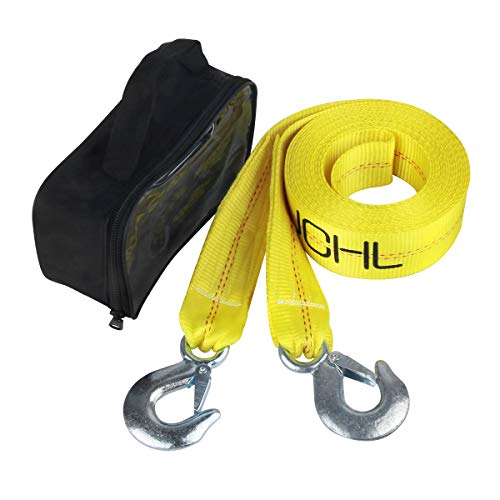
Nylon Tow Strap with Hooks 2”x20’ Car Vehicle Heavy Duty Recovery Rope 20,000 lbs Capacity Tow Rope for Car Truck Jeep ATV SUV Best for most families
- Load-rated strength enables safe vehicle recovery and debris movement without metal chains.
- Low stretch reduces stored energy and snapback, improving control and safety during pulls.
- Resistant to abrasion, UV, and water for reliable performance in rain, mud, and snow.
- Compatible with shackles and recovery points; supports anchors, hauls, and improvised rescue drags.
 info@emerggear.com