Traction Boards
Why you need this: When evacuation routes turn to mud or snow, traction boards keep you moving, preventing stranding and protecting your family.Traction Boards: The Essential Guide to Vehicle Recovery and Everyday Preparedness
Traction boards—also known as recovery boards, traction mats, sand ladders, or vehicle recovery tracks—are rugged panels designed to restore grip when a wheel loses traction on sand, mud, snow, or ice. Placed under a tire, they create a stable, high-friction ramp that helps a stuck vehicle drive back onto firm ground. Compact, portable, and simple to use, they have become a must‑carry tool for drivers, travelers, overlanders, and emergency planners.
Why do traction boards matter? Because even everyday scenarios—like a muddy parking lot, an icy driveway, or a washed‑out shoulder—can immobilize a car, SUV, RV, or work truck. With traction boards, you get fast, DIY vehicle recovery that reduces towing costs, minimizes drivetrain abuse from wheel spin, and improves safety by shortening the time you’re stranded. In emergencies, they can be the difference between waiting for help and regaining mobility when you need it most.
Beyond off‑road adventures, traction boards offer peace of mind during storms, evacuations, and remote travel. They require no electricity, batteries, or complicated gear, and they work with most vehicles—from compact cars to heavy SUVs—making them a low‑risk, high‑utility addition to your preparedness kit.
How It Works
The core idea behind traction boards is simple physics: increase friction and surface area between your tires and the ground, then guide the vehicle onto stable footing. The boards’ textured lugs interlock with tire tread while spikes or teeth on the underside bite into loose terrain. This creates a controlled, grippy pathway that converts engine torque into forward motion—without excessive wheel spin.
- Tire engagement: Raised lugs and knobs mechanically interlock with tire tread blocks to boost friction.
- Ground anchoring: Underside cleats press into sand, snow, or mud to prevent the board from shooting out.
- Ramped edges: Beveled ends form a gentle incline, helping the tire climb on and build momentum.
- Load distribution: Stiff ribs spread vehicle weight over a larger area to reduce sinking on soft ground.
- Durable materials: High‑impact polymers resist flex, UV, and temperature swings for repeatable performance.
- Multi‑use design: Many boards include grab points, shovel edges, and mounting holes for easy handling and stowage.
Used correctly—with steady throttle, aligned wheels, and minimal slip—traction boards provide a predictable ramp that gets you unstuck quickly and safely.
When Traction Boards Help Most
- Natural disasters: After snowstorms or ice events, traction boards can free a vehicle trapped on a slick driveway or side street when tow response is delayed.
- Natural disasters: Post‑hurricane or flood recovery often leaves waterlogged, muddy roads; boards help you navigate saturated shoulders or detours.
- Home accidents: Parking the front wheels on a wet lawn, slushy curb, or gravel shoulder can immobilize a daily driver; boards restore bite and control.
- Workplace situations: Construction, agriculture, and delivery vehicles frequently encounter ruts, clay, and debris; boards minimize downtime and heavy‑equipment calls.
- Vehicles and drivetrains: From compact cars and crossovers to AWD/4x4 trucks and vans, traction boards assist front-, rear-, or all‑wheel drive in low‑grip conditions.
- Outdoor activities: Overlanding, beach driving, camping, hunting, and trailhead access often involve sand, snow, or mud—prime conditions for traction boards.
- RVs and trailers: Heavier rigs sink faster on soft shoulders; boards provide a quick escape and can help with minor leveling on soft ground.
- Remote travel: In sparsely populated areas where help is hours away, traction boards are a self‑rescue essential.
- Seasonal hazards: Spring thaw, shoulder season slush, and autumn rains turn dirt into slick clay—boards cut through the mess.
- Light utility tasks: As temporary ramps for small height differences or for stabilizing a jack base on firm, flat, and appropriate surfaces (within manufacturer guidance).
Strengths, Suitability & Limitations
Strengths
- Fast, low‑effort recovery without winches or anchors.
- Portable and lightweight; easy to carry, mount, and deploy.
- Protects drivetrains by reducing excessive wheel spin and heat.
- Works across seasons: snow, ice, mud, sand, and mixed terrain.
- Budget‑friendly insurance compared with a single tow bill.
- Minimal training required; clear and repeatable technique.
What It’s Not For
- Not a substitute for a bridge or recovery ramp over gaps or wide trenches.
- Not designed as a jack stand or cribbing for lifting a vehicle.
- Not a towing strap, kinetic rope, or winch; it’s a traction aid.
- Not intended for high‑speed driving while on the boards.
- Not suitable for deep, fast‑moving water or unstable embankments.
Limitations and safety considerations
- Observe the load rating and temperature range; excessive weight or heat can damage boards.
- Manage throttle to avoid melting lugs or shooting the board backward.
- Keep bystanders clear of the line of travel and sides of the vehicle.
- Do not straddle large voids or sharp obstacles that can crack or flex the board.
- Inspect for cracks, warping, or missing lugs; replace compromised boards.
- Follow your vehicle manual regarding traction control and tire pressure adjustments.
What to Look For When Buying Traction Boards
Choosing the right traction boards means balancing material quality, size, and features with your vehicle, terrain, and storage space. Prioritize durability, stability, and credible load ratings over flashy claims.
- Materials and construction: Look for high‑impact, UV‑stabilized polymers with reinforced ribbing. Quality boards resist cracking in cold and softening in heat.
- Lug design: Well‑shaped, closely spaced lugs that interlock with tire tread improve grip; rounded edges reduce tire damage risk.
- Underside traction: Spikes or teeth should anchor into soft ground to prevent slip or kickback.
- Length, width, and profile: Longer boards aid in deep sand or ruts; wider boards help large tires. Low‑profile designs stack and mount easily.
- Rigidity vs. flex: Boards should flex slightly without permanent deformation. Excessive flex indicates weak construction.
- Heat and cold performance: Seek published temperature ranges and realistic load ratings suitable for your vehicle.
- Recovery features: Integrated handles, tether points, and retrieval leashes make deployment and cleanup faster.
- Mounting and storage options: Pre‑molded holes or slots for brackets or straps help secure boards on a rack, bed, or cargo area.
- Weight and portability: Lighter boards are easier to carry; heavier boards may offer added stiffness—match to your use case.
- Color and visibility: Bright or contrasting colors are easier to locate and retrieve in mud, sand, or snow.
- Documentation and support: Clear instructions, safety guidance, and transparent test data indicate a well‑made product.
Beware of low‑quality imitations: Red flags include brittle or chalky plastic, thin ribbing, uneven or sharp lugs, inconsistent molding, exaggerated load claims, and vague or missing instructions. A bargain that fails when you need it most is no bargain at all.
Placement, Storage & Readiness
Traction boards only help if you can reach them quickly. Plan their placement so you can access them even when the vehicle is stuck or the cargo area is crowded.
- Accessible mounting: Roof racks, tailgate mounts, bed racks, or the top of a trunk load keep boards within easy reach. Avoid burying them under luggage.
- Secure transport: Use proper straps or brackets; loose boards can become hazards during sudden stops.
- Kit pairing: Store boards with gloves, a compact shovel, tire gauge, and an air compressor for deflation/inflation tasks.
- Routine inspection: After each trip, wash off mud or salt, check for cracks or warped sections, and verify tether integrity.
- Sun and heat: Prolonged UV and high heat can age plastics. When possible, store out of direct sunlight and away from hot exhaust components.
- Readiness drills: Practice deployment in a safe, controlled environment so your technique is smooth when conditions are stressful.
How to Use It Properly
- Assess and secure the scene: Park safely, engage the parking brake, activate hazards, and keep people clear of the vehicle’s path.
- Prepare the ground: Clear packed snow, ice, or mud from around the stuck tire. Create a small, flat pocket in front of (or behind) the drive wheels.
- Adjust vehicle settings: Follow your owner’s manual for recovery settings. Use gentle throttle; avoid aggressive traction aids that cause excessive wheel spin.
- Air down if appropriate: Reducing tire pressure within safe, manufacturer‑recommended limits can increase tire footprint and grip. Re‑inflate before driving at speed.
- Place the boards: Slide a board under each affected tire with the ramped end toward the intended direction of travel. Ensure underside cleats contact the ground and the board sits flat and stable. Keep retrieval leashes accessible.
- Drive onto the boards: Select a low gear. Apply steady, moderate throttle to climb onto the boards. Keep wheels straight; if you feel slip, stop and reposition rather than spinning.
- Continue to firm ground: Once moving, maintain smooth throttle until the vehicle reaches stable terrain. Avoid stopping with tires on top of the boards unless necessary.
- Recover and stow: Set the parking brake, retrieve boards via their leashes, clean off debris, and store securely. Re‑inflate tires to normal pressure and re‑enable any vehicle systems as needed.
Safety reminders: Never stand directly in front of or behind a tire or alongside a loaded board; avoid wheel spin that can eject debris or the board itself; and keep bystanders at a safe distance. If conditions worsen or the vehicle is at risk of sliding, reassess and consider additional recovery methods.
Final Summary
Traction boards are a simple, reliable, and cost‑effective solution for getting unstuck in snow, mud, sand, or ice. They require no power, pack easily, and work across vehicle types—from daily commuters to expedition rigs. In emergencies and everyday mishaps alike, they deliver fast, safer self‑recovery that keeps you moving and reduces your reliance on outside help.
Choose boards built from durable materials with trustworthy load ratings, store them where you can reach them quickly, and practice proper technique before you need it. With the right preparation, traction boards turn uncertainty into confidence, helping you travel farther, respond smarter, and get home safely.
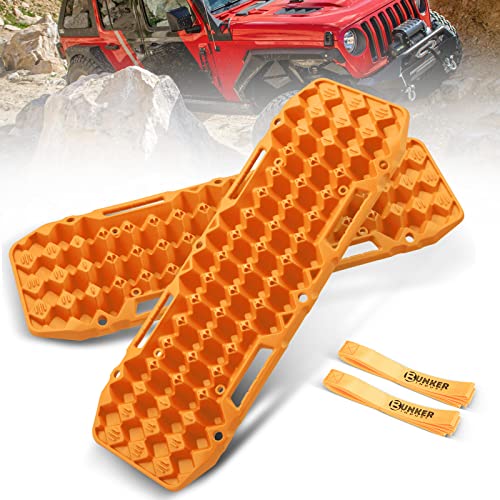
BUNKER INDUST Off Road Traction Boards, Pair Recovery Tracks Traction Mat for Vehicle Truck Jeep SUV, Mud, Snow, Sand Ramp-Orange Emergency Tire Traction Pads (Gen 10th) Best for most families
- Immediate self-recovery on mud, sand, and snow; reduces immobilization during evacuations.
- No fuel, battery, or tow vehicle required; deployable by one person.
- High-friction lugs interlock with tread; increase traction and limit wheel spin.
- Compact and easy to stow; adds redundancy when rescue access is delayed.
 info@emerggear.com