Emergency LED Lantern
Why you need this: When the lights go out, an emergency lantern keeps your home lit and your loved ones calm and safe until power returns.Emergency LED Lantern: Complete Guide to Preparedness, Buying, and Safe Use
An emergency LED lantern is a portable light designed to deliver safe, bright, and efficient illumination when you need it most. Unlike candles or fuel lanterns, it produces light from LEDs powered by batteries, so there is no open flame, no fumes, and minimal heat. Whether the power goes out in a storm, your car breaks down at night, or you simply drop a glass in a dark kitchen, an emergency LED lantern offers hands-free, room-filling light that helps you stay calm, productive, and safe.
It matters because reliable light is a foundational preparedness tool. Clear visibility prevents injuries, supports first aid, enables communication, and helps you make smarter decisions. In everyday life, it also pulls double duty: think backyard dinners, camping trips, workshops, and kids’ blanket forts. When the unexpected happens, a well-chosen emergency LED lantern can become the most-used item in your emergency kit.
Compared to older lighting options, modern lanterns offer long runtimes, adjustable brightness, and durable construction. Many also include features like USB charging, battery indicators, and red or SOS modes. For households, vehicles, workplaces, and outdoor adventures, having at least one emergency LED lantern per key area is a smart, low-cost upgrade to everyday safety.
How It Works
An emergency LED lantern uses light-emitting diodes (LEDs) paired with a power source (replaceable batteries or a rechargeable pack) and a driver circuit that regulates power. A diffuser spreads light evenly for area illumination, and the housing protects components from bumps and weather. Most models offer multiple brightness levels to balance output and runtime.
- LEDs + Driver: Efficient LEDs convert energy into light with minimal heat. A driver ensures stable output and protects the battery.
- Power Source: Options include AA/AAA cells, lithium primary batteries, or built-in rechargeable batteries. Some add solar or hand-crank as backup.
- Optics & Diffusion: A translucent globe or lens spreads light in 360° for room coverage.
- Modes & Controls: Multiple brightness levels, red light for night vision, and sometimes SOS for signaling.
- Durability: Impact-resistant housings and water resistance help the lantern survive real-world use.
When the Emergency LED Lantern Helps Most
- Natural disasters: Hurricanes, blizzards, ice storms, floods, earthquakes, and wildfires often knock out power. Lanterns provide safe, extended lighting for sheltering at home or evacuating.
- Home accidents and repairs: Tripped breakers, leaking pipes, or a broken window at night. Bright, hands-free lighting reduces hazards from broken glass, standing water, and clutter.
- Workplace interruptions: Warehouses, offices, and job sites benefit from stable area light during power failures or maintenance shutdowns.
- Vehicles and roadside emergencies: Nighttime tire changes, jump-starts, and waiting for assistance are safer with a lantern you can set on the ground or magnetically mount.
- Outdoor activities: Camping, fishing, tailgating, backyard gatherings, and off-grid cabins all require reliable, efficient lighting that won’t smoke or sputter in wind.
- Apartment and stairwell outages: Elevators and hallways can go dark unexpectedly. A compact lantern prevents trips and falls while navigating stairs.
- Caregiving and family needs: Gentle, dimmable light helps with late-night checks on children or elders without harsh glare.
Strengths, Suitability & Limitations
Strengths
- Safe indoors: No flame, fumes, or hot mantles—ideal for homes with kids and pets.
- Efficient and bright: LEDs deliver high lumens with long runtimes, especially on lower settings.
- Area illumination: Diffused, 360° light fills rooms better than a narrow-beam flashlight.
- Durable and weather-ready: Impact resistance and water resistance (check IP rating) improve reliability.
- Versatile power: Works with common batteries or integrated rechargeables; some add solar or crank.
- Feature-rich: Dimming, red light for night vision, battery indicators, and sometimes power bank functions.
What It’s Not For
- Long-range spotlighting: A lantern isn’t a distance “thrower” for search duty—use a flashlight or headlamp for that.
- Hazardous environments: Unless explicitly certified, it’s not explosion-proof or intrinsically safe for flammable atmospheres.
- Deep submersion: Most lanterns tolerate rain or splashes, not underwater use.
- High-heat or charging near fuels: Keep away from stoves, heaters, and stored gasoline while charging.
Limitations and safety considerations
- Battery care matters: Over-discharging or storing at extreme temperatures shortens battery life.
- Magnets and mounting: Magnetic bases are convenient but keep away from sensitive instruments and medical implants.
- Eye comfort: Avoid staring into LEDs on high brightness. Use diffusers and lower modes in tight spaces.
- Child safety: Secure battery compartments and store spare button cells and small parts out of reach.
- Realistic expectations: Advertised lumens and mAh can be exaggerated on low-quality units—buy with care.
What to Look For When Buying an Emergency LED Lantern
Choose features that match your space, climate, and how long you expect to be without power. Quality matters for safety and reliability.
- Brightness (lumens) and beam pattern: 200–500 lumens covers a room comfortably; higher outputs can light larger areas. Look for even, 360° diffusion and dimming to fine-tune runtime.
- Runtime and regulation: Longer runtimes at medium or low settings are more practical than brief bursts of maximum brightness. Regulated output keeps light steady as batteries drain.
- Power source:
- Replaceable batteries: AA/AAA are convenient to stock; lithium primary cells work better in the cold.
- Rechargeable packs: Built-in batteries offer USB-C charging, battery indicators, and sometimes power bank features.
- Hybrid/backup charging: Solar panels or hand-cranks are slow but useful as a last resort.
- Charging and safety electronics: Overcharge, over-discharge, and short-circuit protection increase safety. A clear battery indicator prevents surprises.
- Durability and weather resistance: Impact ratings and at least IPX4 water resistance handle rain and splashes. Tight port covers and robust handles improve longevity.
- Controls and usability: Big buttons, glove-friendly operation, mode memory, and a lockout function help in stressful situations.
- Color temperature and CRI: Warm white (around 2700–3500K) is cozy; neutral to cool white (4000–5700K) enhances task visibility. Higher CRI improves color accuracy for first aid.
- Mounting and portability: Hooks, magnets, flat stable bases, and tripod options expand placement choices. Consider weight and size for packs or glove boxes.
- Compliance and documentation: Look for recognized safety marks and a clear manual. Transparent specifications inspire trust.
- Warranty and support: Reliable support and clear warranty terms are signs of a product built to last.
- Beware of imitations: Be cautious of unrealistic lumen or capacity claims, flimsy build, aggressive flicker at low modes, and missing safety information.
Placement, Storage & Readiness
Pre-positioning your emergency LED lanterns saves precious time. Place them where you’ll actually reach for them first and maintain them on a simple schedule.
- Home placement: Keep one near the main breaker panel, kitchen, hallway or stairwell, bedrooms, and the bathroom. Store a lantern in a high, visible spot—never buried in a box.
- Vehicle placement: Trunk or cargo area with your roadside kit, plus a smaller unit in the glove compartment for quick access.
- Work and school: One in a desk drawer or facility emergency bin; label it clearly.
- Go-bags and kits: Include a compact lantern with spare batteries or a short USB-C cable and power bank.
- Battery management:
- For alkaline batteries, store spares separately to prevent leaks; inspect quarterly.
- For rechargeables, top up every 3–6 months. Store around half charge if not used for long periods.
- Keep spares in original packaging or protective cases to prevent short circuits.
- Environment: Avoid high heat (attics, dashboards) and prolonged direct sun. Keep away from flammables while charging.
- Readiness routine: Calendar a quick monthly check: test power, cycle modes, confirm brightness, and verify charging cables are with the lantern.
- Common mistakes to avoid: Leaving alkalines installed for years, losing the charging cable, placing a lantern on an unstable perch, or storing magnets next to compasses and sensitive devices.
How to Use It Properly
- Unpack and read the quick guide. Familiarize yourself with buttons, modes, and battery indicators before an emergency.
- Power up safely. Install fresh batteries or fully charge via USB. Use the recommended charger and keep the lantern on a stable surface while charging.
- Perform a function check. Turn it on, cycle through modes, and confirm that the battery indicator works.
- Choose sensible placement. Set the lantern on a flat surface, hang from a hook, or attach magnetically where it won’t fall or cause glare.
- Select the right mode. Use low or medium for general tasks to conserve runtime; switch to high only when needed. Use red or warm modes to preserve night vision.
- Practice power discipline. In extended outages, schedule lighting periods and use lower brightness to extend battery life.
- Signal if necessary. If your lantern has SOS or strobe, use it for visibility in roadside or rescue scenarios, mindful not to distract drivers at close range.
- After use, reset for readiness. Recharge or replace batteries, wipe the housing dry, coil and store the cable, and return the lantern to its designated spot.
Safety reminders: Do not stare into LEDs on high brightness, keep batteries away from children, and avoid charging near liquids or flammable materials.
Final Summary
An emergency LED lantern is one of the most valuable, low-cost upgrades you can make to your preparedness plan. It delivers safe, efficient, room-filling light for power outages, roadside incidents, and everyday tasks, without the hazards of open flame or fumes. With the right features—solid runtime, dependable power options, weather resistance, and practical mounting—you’ll have lighting you can trust when conditions are at their worst.
Take action today: decide how many lanterns your home, vehicle, and workplace need; choose quality units with honest specs and safety protections; and stage them where you can reach them fast. With a reliable emergency LED lantern ready to go, you gain peace of mind, day-to-day convenience, and real resilience when the lights go out.
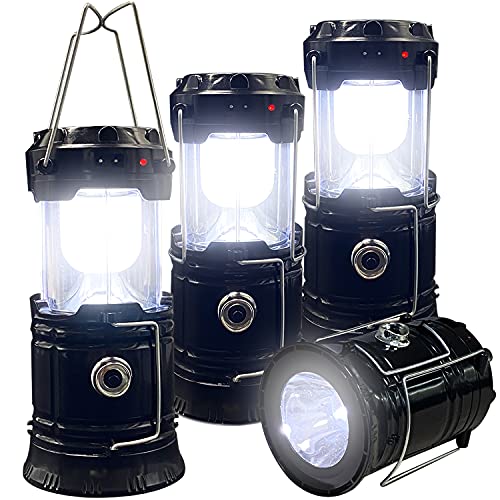
Collapsible Portable LED Camping Lantern XTAUTO Lightweight Waterproof Solar USB Rechargeable LED Flashlight Survival Kits for Indoor Outdoor Home Emergency Light Power Outages Hiking Hurricane 4-Pack Best for most families
- 360° area light for room-wide visibility and task work during outages.
- LED efficiency delivers extended runtime and dependable cold-start performance.
- No open flame or fumes; reduces fire and carbon monoxide risk indoors.
- Water-resistant, impact-tolerant housing keeps working after shocks, rain, and leaks.
 info@emerggear.com