Indoor Air Quality Monitor
Why you need this: In emergencies, an indoor air quality monitor warns when air is dangerous, helping you ventilate or evacuate and protect your family.Indoor Air Quality Monitor: A Comprehensive Guide for Health, Safety, and Preparedness
An indoor air quality monitor is a compact device that measures what you cannot see in the air: fine particles, carbon dioxide, volatile organic compounds, humidity, temperature, and other indicators of pollution and comfort. By turning invisible air into useful data, it helps you make fast, informed decisions that protect your health and improve daily life. Clean air isn’t a luxury—it is essential for better sleep, sharper thinking, fewer allergy symptoms, and long-term well-being.
Why does this matter? Modern homes and workplaces are tightly sealed for energy efficiency, which can trap contaminants from cooking, heating, cleaning products, building materials, and even outdoor smoke. A well-chosen indoor air quality monitor provides real-time readings and alerts when levels rise, prompting you to open a window, switch on ventilation, or run an air purifier before problems escalate.
During emergencies or everyday accidents, the right data can be lifesaving. When wildfire smoke drifts into your neighborhood, for example, a monitor helps you decide when to close windows, seal gaps, and run filtration. If a space feels stuffy, elevated carbon dioxide readings validate the need for fresh air. If you’ve spilled a solvent or started a DIY project, a spike in VOCs tells you to ventilate immediately. Use an indoor air quality monitor as an early-warning companion—but also remember it does not replace dedicated life-safety alarms like smoke and carbon monoxide detectors.
In short, this tool brings clarity. It transforms guesswork into evidence, supports healthier habits, and adds a smart layer of preparedness to your home, office, vehicle, or travel kit.
How It Works
Indoor air quality monitors combine sensors, a small fan or air inlet, and onboard electronics to sample the air and translate it into readable metrics. Although features vary, most devices follow the same core principles:
- Particle measurement (PM2.5/PM10): A laser or light-scattering sensor counts particles such as smoke, dust, and soot, estimating mass concentration (commonly µg/m³). High PM2.5 is linked to respiratory irritation and long-term health risks.
- Carbon dioxide (CO2): Often measured with an NDIR (non-dispersive infrared) sensor. CO2 isn’t poisonous at typical indoor levels, but elevated concentrations indicate insufficient ventilation and can correlate with headaches, drowsiness, and reduced cognitive performance.
- VOCs (volatile organic compounds): Metal-oxide or other sensor types estimate overall VOC levels. These come from paints, cleaners, new furniture, adhesives, and more. Some monitors also estimate formaldehyde or ozone.
- Temperature & humidity: Comfort and health indicators that affect dryness, mold risk, and even airborne pathogen persistence.
- Optional gases: Some devices include electrochemical sensors for specific gases such as carbon monoxide. Always use dedicated alarms for critical life-safety monitoring.
Modern units typically show color-coded air quality indicators, customizable alerts, data logging, and connectivity for trend tracking. Calibration routines—automatic or manual—help maintain accuracy by correcting for sensor drift over time. The result: you get real-time snapshots plus long-term trends to diagnose issues and verify improvements.
When The indoor air quality monitor Helps Most
- Natural disasters: Wildfire smoke infiltration, dust storms, or nearby industrial incidents. Track PM2.5 and VOC spikes to guide sealing and filtration steps.
- Home accidents & everyday mishaps: Burnt cooking, an accidental chemical spill, paint or adhesive projects, candle or incense overuse, or a space heater that’s raising pollutants. Data prompts timely ventilation.
- Moisture events: After leaks or flooding, humidity monitoring helps you prevent mold by drying the space thoroughly and keeping relative humidity in the optimal range.
- Workplaces: Workshops, salons, makerspaces, studios, and offices. Identify when ventilation is needed during soldering, sanding, 3D printing, or packed meetings with rising CO2.
- Vehicles and travel: In cars, RVs, and cabins, a portable monitor reveals when outside air or recirculation is best, highlights cabin filter issues, and guides you during wildfire season.
- Temporary outdoor setups: Tents, pop-up workstations, or event booths. Monitor nearby smoke, generator exhaust drifting into enclosures, or elevated dust during setup/teardown.
- Renovation and move-in periods: New construction materials and furnishings can off-gas VOCs. The monitor helps you ventilate effectively and decide when it’s safe to occupy.
Strengths, Suitability & Limitations
Strengths
- Real-time awareness: See air quality changes immediately during cooking, cleaning, or outdoor smoke events.
- Actionable insights: Clear triggers to ventilate, filter, or adjust behavior—no more guessing.
- Trend tracking: Determine patterns over days and seasons; verify the impact of purifiers or ventilation upgrades.
- Versatility: Useful in homes, offices, classrooms, workshops, vehicles, and temporary spaces.
- Preparedness value: Acts as an early-warning layer for smoke and chemical odors while supporting resilience plans.
What It’s Not For
- Not a replacement for smoke alarms, carbon monoxide alarms, or professional gas detectors.
- Not a certified compliance instrument for regulated industrial environments unless explicitly specified.
- Not a medical device: It informs decisions but does not diagnose or treat health conditions.
- Not perfect for pinpointing every chemical: Many devices measure “total VOCs” and cannot identify specific compounds.
Limitations and safety considerations
- Sensor drift and calibration: Over time, sensors can drift. Follow calibration and maintenance guidance.
- Cross-sensitivity: Temperature, humidity, and other gases can affect readings; interpret values contextually.
- Placement matters: Near windows, vents, or purifiers can skew numbers. Position thoughtfully for representative results.
- Reading vs. response: Always prioritize safety. If you suspect a dangerous situation (e.g., strong fuel odor), evacuate and contact professionals regardless of monitor readings.
What to Look For When Buying a indoor air quality monitor
The best choice balances sensor quality, usability, and long-term reliability. Consider the following:
- Core sensors: PM2.5/PM10, CO2 (preferably NDIR), TVOCs, temperature, and humidity. Optional sensors (e.g., CO, ozone, formaldehyde, radon) depend on your risks.
- Accuracy and transparency: Clear specifications, stated sensor types, and documented error ranges inspire confidence.
- Data visibility: An easy-to-read display, color status indicators, and intuitive units (µg/m³, ppm, ppb). Historical graphs or exported logs are valuable for analysis.
- Alarms and thresholds: Customizable alerts for PM, CO2, VOCs, and humidity help you act quickly.
- Connectivity and logging: Local storage, Wi‑Fi or Bluetooth options, and the ability to analyze trends without depending on a constant internet connection.
- Power options: Plug-in for 24/7 monitoring or a rechargeable battery for portability and testing multiple rooms.
- Build quality: Robust casing, protected inlets, a stable base, and dust-resistant design for longevity.
- Calibration support: Automatic baseline calibration (common for CO2) and/or manual calibration procedures; replaceable sensors extend service life.
- Safety and compliance marks: Look for recognized electrical and radio certifications appropriate to your region.
- Documentation and support: Clear manuals, defined maintenance schedules, and responsive customer service policies.
Beware of low-quality imitations. Red flags include vague or unrealistic claims, no mention of sensor technology, implausibly broad detection lists, or unusually low prices that promise “lab-grade” performance. Reliable devices explain what they measure and how.
Placement, Storage & Readiness
Correct placement and routine care are essential for accurate readings and fast response when you need it most.
- Primary placement: Put the indoor air quality monitor in the “breathing zone,” about 3–6 feet (1–2 m) above the floor, away from direct sun, heaters, humidifiers, and strong drafts.
- Avoid skewed results: Don’t place it directly next to a purifier, open window, range hood, or supply vent unless you’re intentionally testing that source.
- Room coverage: If you have one device, locate it where people spend the most time (bedroom or living area) and spot-check other rooms periodically.
- Multi-level homes: Consider one monitor per floor or move a portable device to assess each level’s conditions.
- Vehicle use: Secure it on a stable surface and avoid obstructing airbags or controls. Monitor when idling or driving through smoke or tunnels.
- Storage: Keep it clean and dry, away from extreme temperatures. If storing long-term, charge to a moderate level, power it off, and protect the air inlets from dust.
- Maintenance: Dust the sensor inlets gently, follow recommended calibration intervals, and replace filters or sensor modules if applicable.
- Readiness checks: Test alarms, confirm the time/date for accurate logs, and verify battery health before wildfire season, renovations, or travel.
How to Use It Properly
- Unbox and verify contents. Check the monitor, power cable, and documentation. Inspect for shipping damage.
- Charge or plug in. Ensure a stable power source for continuous data and alarms.
- Update firmware (if available). Keep the device current for better accuracy and reliability.
- Place the monitor correctly. Choose a representative location in the breathing zone, away from vents and direct sunlight.
- Calibrate as directed. Follow the manual for initial calibration. For CO2 with automatic baseline calibration, allow the device to run in well-ventilated conditions regularly.
- Set thresholds and alerts. Configure your preferred limits for PM2.5, CO2, VOCs, and humidity so you get timely prompts to act.
- Observe baseline levels. Watch readings over a few days to learn your normal patterns before making big changes.
- Respond to spikes. For high PM2.5, use filtration and reduce smoke sources; for high CO2, increase ventilation; for high VOCs, ventilate and isolate sources. Always prioritize safety if odors are strong or symptoms appear.
- Log and compare. Review historical trends to verify the impact of purifiers, filters, or ventilation adjustments. Use the data to plan long-term improvements.
- Maintain regularly. Clean inlets, recalibrate per schedule, and replace consumables. Keep the monitor ready for wildfire season, renovations, or travel.
Safety reminder: A monitor is educational and advisory. Do not rely on it instead of required life-safety alarms. If you suspect a dangerous situation—like a fuel leak or strong fumes—evacuate and seek professional help immediately.
Final Summary
An indoor air quality monitor gives you actionable visibility into the air you breathe—day in and day out. It helps you respond quickly to smoke and chemical spikes, keep carbon dioxide in check for better focus and comfort, and maintain healthy humidity to reduce mold risk. This is one of the most practical, high-impact tools for health, comfort, and preparedness you can add to your space.
Choose a device with credible sensors, clear data, and reliable calibration. Place it thoughtfully, maintain it routinely, and use the insights to improve ventilation and filtration. When you’re ready to add an indoor air quality monitor to your kit, prioritize accuracy, durability, and ease of use—because better air means better living, and solid data is the fastest path to smart decisions.
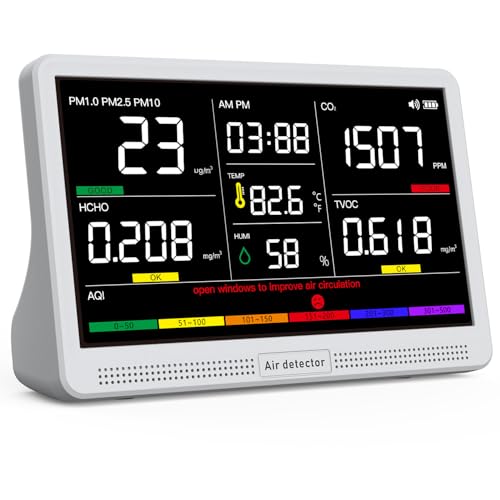
16 in 1 Air Quality Monitor Indoor 7" Display 9 AQI+7 AQI Alerts, CO2 Monitor Air Quality Tester for CO2, TVOC, PM2.5 PM1.0 PM10, HCHO Temperature Humidity AQI & Time Air Quality Meter for Home Best for most families
- Real-time PM2.5, CO2, and VOC levels quantify smoke, solvent, and ventilation failure risks.
- Supports shelter-in-place decisions: seal, ventilate, deploy HEPA, or leave.
- Confirms filtration performance by showing particulate reduction over minutes.
- Humidity and temperature data help prevent mold and heat stress during recovery.
 info@emerggear.com