Power Bank
Why you need this: You need a solar power bank to stay connected and protect loved ones when blackouts, storms, or evacuations leave you without power.The Complete Guide to Power Banks: Portable Energy for Everyday Life and Emergencies
A power bank is a compact, rechargeable battery pack designed to keep your phones, tablets, earbuds, headlamps, cameras, and other small electronics powered when wall outlets are out of reach. In a world that runs on connectivity and navigation, having reliable portable power can be the difference between staying informed and going dark. Whether you’re commuting, traveling, working in the field, or riding out a storm, a power bank provides instant, on-demand energy that fits in your pocket or bag.
Why it matters: when grids fail, travel plans change, or you simply forget to charge overnight, a power bank acts like a personal backup generator for your essential devices. It keeps you connected to loved ones, lets you access maps and emergency alerts, and helps you document insurance claims with charged cameras and phones. In everyday accidents—like a drained phone before an important call—a power bank transforms stress into a quick, quiet solution.
In emergencies, portable power supports communication, lighting, and information access—three pillars of personal safety. A charged phone can contact help, a recharged headlamp keeps hands free in the dark, and a powered hotspot can share updates with family and colleagues. Even beyond crises, the convenience of charging multiple devices on the go makes a power bank one of the most practical additions to any everyday carry kit, travel bag, or home preparedness setup.
How It Works
Inside a power bank are high-energy-density lithium-ion or lithium-polymer cells, a battery management system (BMS), and power electronics that regulate voltage and current. The cells store energy at a nominal voltage around 3.6–3.7V. The circuitry steps that voltage up (or down) to standard charging levels—most commonly 5V via USB-A and variable voltages via USB-C Power Delivery (PD) such as 9V, 12V, 15V, 20V, and, in some models, up to 28V for high-wattage laptops.
When you plug in a device, the power bank negotiates the best charging profile, then supplies steady, safe power. When you plug the power bank into a wall charger, it reverses the flow to recharge its internal cells. LEDs or a display typically show state of charge and, sometimes, wattage in and out.
- Capacity: Usually listed in milliamp-hours (mAh) and watt-hours (Wh). Wh is the most accurate comparison across models: Wh = (mAh × 3.7) ÷ 1000.
- Input power: How quickly the power bank refills. Higher-wattage USB-C input (e.g., 18–45W+) means shorter downtime.
- Output power: The maximum wattage delivered to devices. Modern USB-C PD banks can power phones, tablets, handheld gaming devices, some cameras, and certain laptops.
- Efficiency: Expect real-world delivered energy to be less than rated capacity due to conversion and heat losses.
- Safety: The BMS manages overcharge, over-discharge, short-circuit, and temperature protection to keep cells within safe limits.
When the Power Bank Helps Most
- Natural disasters and outages: Hurricanes, wildfires, earthquakes, winter storms, and grid failures. Keep phones, radios, headlamps, and hotspots running to access alerts and coordinate plans.
- Home accidents: Tripped breakers, unexpected maintenance, or forgotten overnight charging before a big day.
- Workplace and field use: Long shifts, job sites, inspections, trade shows, and field research where outlets are scarce and uptime matters.
- Vehicles and travel: Road trips, rideshares, delayed flights, and train journeys. Charge navigation devices, e-readers, and noise-canceling headphones without hunting for sockets.
- Outdoor activities: Camping, hiking, fishing, festivals, and photography days. Recharge GPS units, action cameras, and lanterns to extend the adventure.
- Parents and caregivers: Keep kids’ tablets charged on travel days and maintain contact in crowded venues.
- Students: Power laptops, tablets, and calculators through back-to-back classes and library sessions.
- Independent professionals: Remote work from parks, cafes, conferences, and client sites without power anxiety.
Strengths, Suitability & Limitations
Strengths
- Portable reliability: On-demand energy for critical communication and navigation.
- Wide compatibility: USB-A and USB-C ports support phones, tablets, earbuds, cameras, e-readers, and more.
- Fast charging options: USB-C PD can quickly top up modern devices; some units support laptop-level wattage.
- Multiple-device support: Several ports allow charging a phone and accessory simultaneously.
- Scalable choices: Slim everyday carry banks to high-capacity weekend and emergency units.
- Low maintenance: Simple to charge, simple to use, long standby when stored properly.
What It’s Not For
- Not a whole-home backup: It won’t run large appliances, space heaters, or refrigerators.
- Not for engine starting: Unless specifically designed as a jump starter, do not attempt to crank vehicle engines.
- Not medical life support: Do not rely on a power bank as the sole power source for critical medical devices without manufacturer guidance.
- Not for extreme environments: Standard banks aren’t designed for high heat, sub-zero temps, or submersion.
Limitations and safety considerations
- Observe airline rules: most allow under 100 Wh in carry-on only; 100–160 Wh may need approval; never pack in checked baggage.
- Protect from heat, crushing, puncture, and water. Do not use a swollen, leaking, or foul-smelling battery—recycle it immediately.
- Use quality, properly rated cables (especially for high-wattage USB-C PD). Avoid covering the bank while charging to reduce heat buildup.
- Store at moderate temperatures with partial charge for long-term health; avoid deep discharge for extended periods.
- Dispose responsibly at e-waste or battery collection points; never throw lithium cells in household trash.
What to Look For When Buying a Power Bank
Choosing the right power bank comes down to matching capacity, power output, and portability to how you live, travel, and prepare. The best value balances enough energy and speed without unnecessary bulk.
- Capacity (mAh/Wh): Use watt-hours for apples-to-apples comparisons. Estimate device needs: phones are commonly around 10–15 Wh; tablets more; laptops significantly more. Larger capacity means more recharges but also more weight.
- Output power (W): For fast charging, look for USB-C PD with sufficient wattage for your devices. Phones benefit from 18–30W; tablets and some laptops may need 30–65W+; higher-wattage options exist for demanding notebooks.
- Input power and recharge time: High input (e.g., 18–45W+) refills the bank faster, which matters in short layovers or rolling outages.
- Port selection: A mix of USB-C and USB-A covers legacy and modern devices. Multiple ports allow sharing but may split available wattage—check how power is distributed.
- Cell chemistry and quality: Reputable lithium-ion or lithium-polymer cells, robust BMS, and solid construction improve safety and longevity.
- Safety certifications: Look for compliance markings such as UN 38.3 (transport safety), UL 2056 or equivalent, IEC 62133, and regional marks like CE, FCC, and RoHS.
- Build and materials: Fire-resistant housings, reinforced ports, and tight tolerances. A non-slip exterior or included sleeve can help protect the bank in daily carry.
- Displays and indicators: A clear LED gauge or percentage display helps you plan usage and avoid surprises.
- Features that matter: Pass-through charging, low-current mode for earbuds and wearables, integrated cables, wireless charging pads, or a small utility light for emergencies.
- Size and weight: Slim options suit everyday carry; larger banks suit multi-day trips or outage kits. Pick the smallest option that reliably meets your needs.
- Environmental tolerance: If you expect rain or dust, consider an option with an ingress protection rating (IP) and covered ports.
- Support and warranty: Documentation, clear specs, and responsive support are indicators of a well-made product.
Warning about low-quality imitations: Be wary of unrealistic capacity claims in tiny housings, mislabeled watt-hours, missing safety documentation, or vague specs. Overstated numbers and suspiciously low prices often signal poor cells and inadequate protection circuits.
Placement, Storage & Readiness
Think of your power bank like any preparedness tool: you want it accessible, charged, and protected where you’ll actually use it.
- Everyday carry: Keep a slim bank with a short USB-C or appropriate cable in your bag, purse, or jacket pocket.
- Home base: Stage a larger-capacity bank in a central “charging hub” alongside cables, a multi-port wall charger, and a flashlight.
- Car kit: Store in the cabin (not a hot trunk) and use a sunshade or insulated pouch in warm climates. Top off regularly.
- Go-bag and first-aid kit: Pair a bank with a headlamp, radio, and printed emergency numbers. Add a small set of adapters.
Maintenance and inspection
- Top off every 1–3 months; for long storage, keep around 40–60% charge and cycle it quarterly.
- Inspect for swelling, cracks, odors, or heat during use. If anything seems off, discontinue use and recycle properly.
- Label cables and keep them bundled with the bank so you never hunt for the right connector.
- Avoid stacking heavy items on top, leaving it in direct sunlight, or charging under pillows and bedding.
How to Use It Properly
- Charge the power bank fully using a compatible wall charger and cable. Confirm LEDs or the display indicate a full charge.
- Check compatibility for your device. For high-wattage charging, use a properly rated USB-C PD cable (e-marked for higher power if needed).
- Connect your device to the appropriate port. If the bank has a low-current mode for wearables or earbuds, enable it as directed by the manufacturer.
- Monitor charging. Many phones and tablets display “fast charging” or similar indicators. If the bank gets uncomfortably hot, disconnect and let it cool.
- Unplug when topped up to reduce heat and preserve both the device and the power bank’s lifespan.
- Recharge the power bank after use so it’s ready for the next outing or emergency.
- Store safely at moderate temperature, away from direct sun, sharp objects, and liquids. Keep out of reach of small children and pets.
- Travel smart: keep the bank in carry-on luggage; verify airline watt-hour limits; protect ports with caps or a pouch.
Safety reminders: Do not use damaged cables, do not pierce or crush the bank, do not expose to water unless rated for it, and never continue using a unit that shows signs of swelling, leakage, or unusual odor.
Final Summary
A power bank is more than a convenience—it’s a compact resilience tool that keeps your lifelines powered when you need them most. From everyday commutes to multi-day outages, the right mix of capacity, output, and build quality turns a pocket-sized battery into dependable portable power insurance.
Choose thoughtfully: match capacity to your devices, prioritize safe and certified designs, and favor clear specs over marketing hype. Stage it strategically, keep it charged, and pair it with the right cables so you’re never without a plan.
When the lights go out or the day runs long, a well-chosen power bank helps you stay connected, informed, and in control—no outlet required.
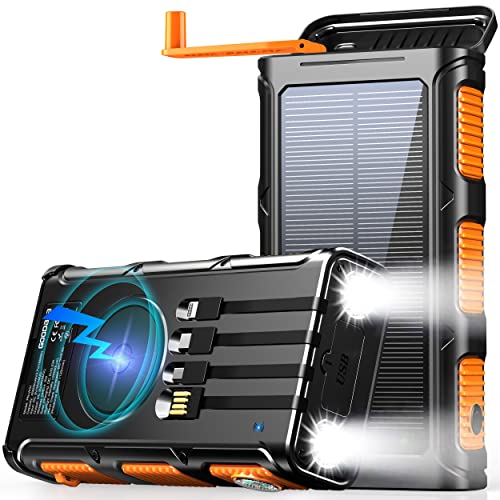
GOODaaa Portable Charger 42800mAh Built in 4 Cables and Thermometer 15W Fast Charging Power Bank Five Outputs Three Inputs Solar Charger Power Bank, SOS/Strobe/Strong Flashlights, Carabiner Best for most families
- Powers phones, radios, headlamps, and GPS to sustain communication, lighting, and navigation during outages.
- Recharges from wall, vehicle, or USB solar panel, enabling power resupply when infrastructure is limited.
- Integrated protection circuits reduce overcharge, short circuit, and overheating risk.
- Portable energy storage reduces reliance on generators and keeps essential devices operational in the field.
 info@emerggear.com