Solar Panel
Why you need this: In disasters, a portable solar panel powers communications and essentials without fuel, helping you protect your family when the grid is down.Solar Panel Guide for Emergency Power, Everyday Reliability, and Off‑Grid Readiness
A solar panel is a device that converts sunlight into usable electricity, providing quiet, clean power wherever you can find the sun. In everyday life, a dependable solar panel can keep phones, laptops, lights, radios, cameras, and small appliances powered without relying on the grid. In emergencies, it becomes a lifeline: charging communication devices, preserving food and medicine with battery-backed refrigeration, and powering essential gear when storms, wildfires, or outages cut you off from conventional electricity.
Unlike fuel-powered generators, a solar panel has no fumes, no noise, and minimal ongoing costs. With the right setup—typically a charge controller and a battery—you can bank energy during the day and use it at night. Whether you’re preparing for disruptive weather, outfitting a vehicle or cabin, or simply seeking a reliable backup for your home office, a solar panel is a flexible, scalable foundation for resilient power.
Just as important, a solar panel is easy to store and deploy. Portable models unfold in seconds; rigid versions mount on rooftops, sheds, or racks. That combination of simplicity, durability, and independence is why solar has become a core part of preparedness and everyday readiness.
How It Works
At the heart of a solar panel are photovoltaic (PV) cells—typically silicon—that produce a direct current (DC) when exposed to light. Cells are wired together into modules (the panel), which deliver a specified voltage and wattage. In practical use, the panel connects to a charge controller that manages charging for a battery, and an inverter can convert the stored DC power into the AC power used by household devices.
- Photovoltaic effect: Sunlight knocks electrons loose in the cells, creating DC electricity.
- Series and parallel wiring: Cells in series raise voltage; strings in parallel increase current. The panel’s label shows its voltage (Vmp), current (Imp), and power (W).
- Controller and battery: A charge controller (MPPT or PWM) protects and optimizes charging for batteries (such as LiFePO4 or AGM). The battery stores energy for use day or night.
- Inverter (optional): Converts DC to AC to run standard plugs and appliances. DC devices can run directly from the battery and controller outputs.
- Real‑world output varies: Nameplate wattage is measured at Standard Test Conditions. Expect lower output in high heat, partial shade, or when the sun is low. Clean, cool, well‑aimed panels produce the best results.
When the Solar Panel Helps Most
- Natural disasters: After hurricanes, ice storms, earthquakes, or floods, power may be out for days. A solar panel keeps phones, radios, lanterns, and essential electronics charged so you can communicate and get news.
- Home outages and “everyday” disruptions: Grid failures, blown breakers, or planned maintenance can leave you in the dark. Maintain lighting, charge devices, and run low‑draw appliances via a battery and inverter.
- Workplace and job sites: Power tools’ battery packs, laptops, Wi‑Fi hotspots, and safety lighting can be recharged on remote or temporary sites without noisy generators.
- Vehicles: Keep starter batteries maintained with a small trickle panel or power an RV/van/boat house battery bank for lights, fans, pumps, and communication gear.
- Outdoor activities: Camping, overlanding, tailgating, field research, photography, drones, and ham radio all benefit from quiet, portable power and reduced fuel dependence.
- Community events and preparedness drills: Provide charging stations, lighting, and signage without hunting for outlets or running extension cords.
Strengths, Suitability & Limitations
Strengths
- Quiet, clean, and low maintenance: No fuel, fumes, or oil changes—just sunlight and occasional cleaning.
- Scalable: Start small and expand with additional panels, batteries, and controllers as needs grow.
- Long service life: Quality panels can deliver useful output for many years with minimal degradation.
- Safe and versatile: DC systems reduce many risks of fuel storage and can be installed in apartments, homes, vehicles, and tents.
- Cost‑effective over time: After the initial purchase, energy is free, making solar a smart long‑term hedge against outages and rising power costs.
What It’s Not For
- Instant, high‑power demands without storage: A solar panel alone won’t run large appliances on demand. Most setups need a battery and inverter.
- Whole‑home heating or heavy AC loads: Resistive heaters, large air conditioners, and ovens require substantial arrays and batteries—beyond most emergency kits.
- Critical life‑support systems: Do not rely solely on a small, portable setup for medical equipment where failure could be dangerous—use redundant, professionally designed systems.
Limitations and safety considerations
- Weather dependence: Output drops with clouds, shade, snow, and short winter days. Plan battery capacity accordingly.
- Heat impacts performance: Panels produce less power when hot; ensure ventilation and avoid placing panels on heat‑trapping surfaces.
- Electrical safety: Treat connectors as live when the panel is in sun. Use proper fusing, correct wire gauge, and a controller appropriate for your battery chemistry.
- Mechanical safety: Secure panels against wind gusts. Don’t stand or step on panels; avoid scratching the surface or bending flexible modules beyond their rated curvature.
- Mixing components: Mismatched voltages and unbalanced strings can reduce output or damage equipment. Verify compatibility before connecting.
What to Look For When Buying a Solar Panel
Choosing the right solar panel starts with your use case—emergency backup, vehicle power, or everyday energy savings—and the devices you plan to run. Consider the following factors before you buy.
- Type and form factor: Rigid glass‑and‑aluminum panels are durable and efficient; portable folding panels are easy to transport and deploy; flexible panels are lightweight and contoured but require careful mounting and cooling.
- Cell technology: Monocrystalline panels typically offer higher efficiency and better low‑light performance than polycrystalline. Thin‑film panels are lighter and more shade tolerant but usually less efficient per area.
- Wattage and realistic energy output: Nameplate watts are measured under ideal conditions. In real life, a 100 W panel might deliver about 300–600 Wh per sunny day, depending on location, season, and tilt. Compare outputs at both STC and NOCT when available.
- Voltage and compatibility: Match Vmp and Voc with your charge controller’s input limits. For 12 V batteries, ensure your controller can accept the panel (or series string) voltage.
- Charge controller pairing: MPPT controllers usually harvest more energy, especially in cold or variable conditions. Check current rating (A), battery chemistry support, and protections (over/under‑voltage, temp sensing).
- Connectors and cabling: Standard MC4 connectors offer weather resistance and easy expansion. Verify cable length, wire gauge (thicker for longer runs), and include appropriate fuses or breakers.
- Build quality: Look for tempered glass, robust frames, reinforced corners, secure junction boxes, and kickstands that resist flexing. For portable panels, inspect hinges, fabric, and attachment points.
- Surface materials: ETFE coatings are generally tougher and more UV‑resistant than PET on portable panels, improving longevity.
- Weather protection and ratings: IP65 or higher for junction boxes and connectors helps resist rain and dust. For fixed panels, check wind and snow load ratings.
- Bypass diodes: Integrated diodes help mitigate partial shading, improving real‑world performance.
- Certifications and testing: Standards such as IEC 61215/61730 or UL 61730 indicate verified safety and performance. Documentation and serial numbers are good signs of quality control.
- Portability and weight: For go‑bags and vehicle kits, consider folded size, carrying handles, and included cases or stands.
- Expandability: If you plan to add panels, confirm open‑circuit voltage and controller limits, and ensure connectors and wiring are compatible for series or parallel expansion.
- Quality assurance: Beware of “too‑good‑to‑be‑true” wattage claims, ultra‑thin wires, missing specs, and generic labels without certifications. Low‑quality imitations often underperform or fail early.
Placement, Storage & Readiness
Correct positioning and basic upkeep make a significant difference in performance and lifespan.
- Site and orientation: Aim for full, unobstructed sun. In the northern hemisphere, face panels south (north in the southern hemisphere) and adjust tilt seasonally. Even small shadows can cut output dramatically.
- Tilt and temperature: A slight angle promotes airflow and cooling, improving output and reducing heat stress.
- Cable management: Use short, properly sized cables to minimize voltage drop. Keep connectors off the ground, dry, and protected.
- Security and stability: Anchor portable panels with stakes, sandbags, or guy lines. Avoid placing panels where wind can flip or slam them.
- Cleaning: Dust, pollen, salt, and soot reduce power. Rinse with clean water and a soft cloth. Avoid abrasive scrubbers and harsh chemicals.
- Storage: Dry panels before packing. Use dust caps on connectors, coil cables loosely, and store in a cool, dry place away from heavy items and sharp edges.
- Inspection: Periodically check for cracked glass, delamination, hot spots, corroded connectors, and loose hardware. Test open‑circuit voltage in sunlight to confirm basic function.
- Readiness kit: Keep the panel with its charge controller, fuses, cables, adapters, and a compatible battery. Label connectors and keep an instruction sheet so anyone can deploy the system quickly.
- Avoid common mistakes: Don’t place the panel behind glass; output will drop. Don’t connect a panel directly to a battery without a suitable controller (except specialized trickle chargers with built‑in protection). Don’t mix panels with very different electrical characteristics in the same string.
How to Use It Properly
- Estimate your energy needs: List devices and their wattage. Multiply watts by hours of use to get daily watt‑hours (Wh). Add a buffer for cloudy days.
- Choose a safe, sunny location: Set the solar panel where it gets full sun, away from foot traffic, vehicle doors, or strong gusts. Adjust tilt and orientation for maximum exposure.
- Connect the charge controller to the battery first: This allows the controller to detect battery voltage. Observe polarity and use appropriately rated cables and fuses.
- Connect the solar panel to the controller: Use standard connectors (such as MC4). The panel will be live in sunlight—avoid short circuits and keep connectors dry.
- Optional: Connect an inverter or DC loads: Attach an inverter to the battery for AC devices, or power DC devices from the controller’s load terminals if supported. Fuse appropriately and follow device manuals.
- Verify operation: Check controller indicators or a meter for voltage and charging current. Adjust panel angle to improve performance.
- Manage heat and cables: Keep the back of rigid panels ventilated. Secure cords to prevent tripping and strain on connectors.
- Shut down safely: Disconnect the panel from the controller first (cover or shade the panel if needed), then disconnect the controller from the battery if you’re packing away.
- Maintain regularly: Clean the surface, inspect hardware, and review connections. Recalculate your energy needs if you add or change devices.
Safety reminders: Treat all wiring as energized in sunlight. Use proper fuses/breakers, correct cable gauge, and battery‑specific charging profiles. Keep children and pets away from electrical components and avoid working in wet conditions.
Final Summary
A solar panel is one of the most practical, versatile tools you can add to a preparedness plan. It provides quiet, renewable power for communication, lighting, refrigeration support, and essential electronics—day after day, without refueling. Pair it with a well‑sized battery, a quality charge controller, and sensible placement, and you’ve built a compact power system that keeps working when the grid doesn’t.
Choose thoughtfully—prioritize proven build quality, realistic specifications, and safe, compatible components. Maintain your kit, practice deploying it, and review your load needs periodically. With a dependable solar panel ready to go, you’ll be better equipped for emergencies, more comfortable during routine outages, and one step closer to everyday energy independence.
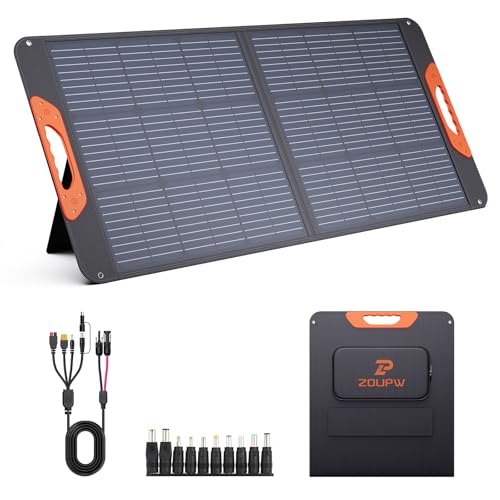
100W Portable Solar Panel,RV Essentials, 20V ETFE Foldable Solar Charger for Power Station,QC3.0 USB-A &Type-C Output,23.5% High Efficiency IP67 Waterproof for Camping RV Offgrid Living Best for most families
- Produces off-grid electricity when fuel and generators fail.
- Powers radios, lights, phones, and small medical devices through a charge controller.
- A 100W panel yields about 300–500 Wh per day in clear conditions.
- Silent, low-maintenance, and emission-free; reduces resupply needs and operational risk.
 info@emerggear.com